


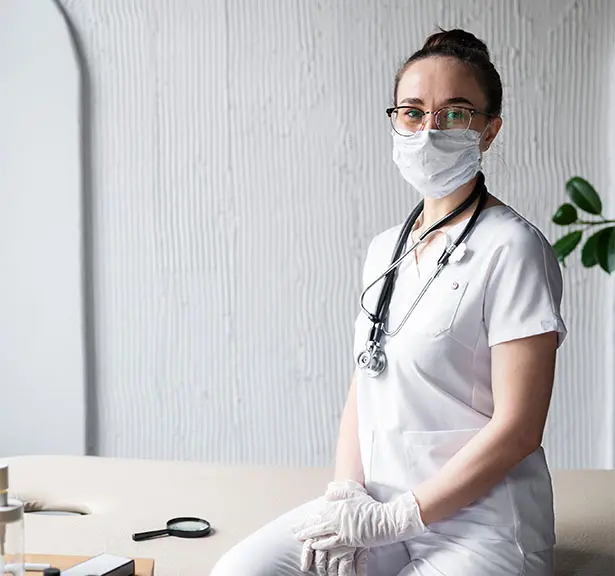
Nurse injector training has become one of the most requested professional development paths for registered nurses across the country. The shift is not surprising. Nurses bring clinical precision, patient communication skills, and a foundational understanding of anatomy that translates directly into aesthetic medicine. What was once a niche career pivot has grown into a well-defined pathway with real earning potential, flexible work environments, and a patient base that is expanding every year.
This is not a trend driven by burnout alone, though that is part of the story. It is a career decision grounded in skill transfer, financial opportunity, and the appeal of a practice model that looks very different from hospital floors and busy clinic schedules.
Why More Nurses Are Choosing Aesthetic Nurse Careers
The conditions driving nurses toward aesthetics are practical and personal at the same time.
Hospital nursing delivers meaningful work, but the physical and emotional demands are significant. Twelve-hour shifts, high patient acuity, staffing shortages, and limited schedule control push experienced nurses to evaluate their options. Aesthetic nursing offers an alternative that still uses clinical training but in a fundamentally different environment.
Med spas and aesthetic clinics typically operate on appointment-based schedules with consistent hours. Patient interactions are elective and outcome-focused rather than crisis-driven. The work is still clinical, still hands-on, and still requires the judgment that nursing training builds. The pace and the setting are just very different.
Beyond lifestyle factors, the financial picture matters. The U.S. Bureau of Labor Statistics reports that registered nurses earn a median annual salary of around $86,000, with significant variation by setting and specialty. Aesthetic nurses who build strong patient panels and work in established med spas often exceed that figure, and those who move into practice ownership or commission-based roles can earn considerably more.
The demand side supports the career shift too. Aesthetic procedures are no longer reserved for a narrow demographic. Minimally invasive cosmetic procedures have increased dramatically over the past decade, with Botox and dermal fillers consistently ranking among the most performed treatments in the country. That volume requires providers, and nurses with proper certification are well-positioned to fill that need.
What Is a Nurse Injector?
A nurse injector is a licensed registered nurse who performs cosmetic injectable treatments, primarily Botox and dermal fillers, within a physician-supervised practice structure.
The role combines clinical assessment, patient consultation, injection technique, and outcome management. Nurse injectors evaluate patients before treatment, identify contraindications, select appropriate products and dosing, perform the procedure, and manage post-treatment care.
The cosmetic nurse career draws on skills nurses already have. Anatomy knowledge informs injection placement and depth selection. Patient communication skills shape consultation quality and expectation management. Clinical judgment drives safe patient selection and complication recognition.
What the role adds is aesthetic-specific training: facial anatomy for injectables, product knowledge, technique refinement, and the business skills needed to build and retain a patient base. That training gap is what nurse injector certification programs are designed to close.

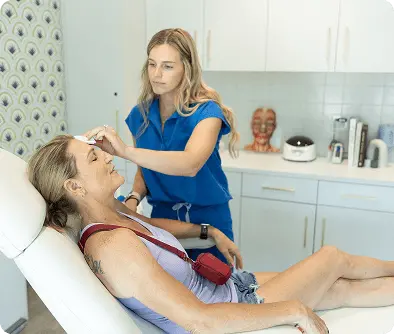
How to Become a Nurse Injector Through Professional Training
The path from bedside nursing to aesthetic nurse practice follows a clear sequence. It starts with verifying your state’s scope of practice requirements and ends with supervised clinical hours in a real patient setting.
Step 1: Confirm your license eligibility. In most states, RNs can perform Botox and dermal filler injections under physician delegation. The supervising physician must have a formal delegation agreement in place, and the RN must demonstrate documented competency in the specific procedures being performed. Requirements vary by state, so confirming the rules in your practice location before enrolling in a program is the right starting point.
Step 2: Choose a hands-on training program. Not all injector training programs are equivalent. Classroom-only courses and online-only certifications do not develop the clinical skill that real patient practice builds. The most effective programs combine didactic instruction with live patient hours under experienced supervision. Look for programs that use real training models, not simulations, and that provide direct instructor feedback during the hands-on component.
Step 3: Complete the training and earn certification. A structured Botox and filler certification course for nurses covers facial anatomy, product science, injection technique, patient consultation, and complication management. Certification upon completion documents your training for both employment purposes and delegation agreement requirements.
Step 4: Establish a supervision structure. Working under a physician or as part of a med spa with an active medical director is the standard entry point. Some nurses join existing practices as employed injectors. Others build independent aesthetic practices under a medical director arrangement. Both paths are viable, and each has different implications for income structure and career trajectory.
Step 5: Build your patient base and refine your technique. The first year of aesthetic practice is where skills sharpen quickly. High patient volume, instructor mentorship, and continuing education all accelerate the development of clinical confidence and aesthetic judgment.
Why Nurse Injector Training Is Essential for Success
Aesthetic procedures are medical procedures. The consequences of poor technique or missed contraindications are visible and, in some cases, permanent. Vascular occlusion from improperly placed filler is a rare but serious complication that requires immediate clinical management. Asymmetry, over-treatment, and dissatisfied patients are more common outcomes of undertrained providers.
The nurses who build strong aesthetic careers are almost always the ones who invested in proper clinical training before seeing patients independently. That training builds the pattern recognition needed to assess patients accurately, select appropriate treatment parameters, and recognize early signs of complications before they escalate.
From a business standpoint, training quality also determines patient retention. Patients who see consistent, natural-looking results come back every three to four months for Botox and every six to twelve months for fillers. That predictable return schedule builds a stable revenue base. Patients who are disappointed with outcomes do not return, and in the age of online reviews, they often say so publicly.
Injector training for nurses that includes real-patient supervised hours, experienced instructor feedback, and structured complication management protocols builds the foundation that sustains a long-term aesthetic career.
Botox Certification for Nurses: What You Need to Know
Botox certification for nurses is a documented credential that confirms completion of a structured training program covering botulinum toxin injection technique, patient assessment, product knowledge, and safety protocols.
The certification itself is not a license. RNs in most states are already licensed to perform delegated medical procedures. The certification documents the specific training completed for Botox injections and supports the competency verification requirement in most physician delegation frameworks.
What a strong Botox training course covers:
- Facial anatomy relevant to neuromodulator placement
- Botulinum toxin product science and dosing principles
- Patient consultation and contraindication screening
- Injection technique for forehead, glabella, crow’s feet, and other treatment areas
- Complication recognition and management protocols
- Documentation and consent standards
The RN Botox certification programs that produce clinic-ready graduates include hands-on patient hours alongside the didactic components. Reading about glabellar injection technique and performing it on a real patient under instructor supervision are fundamentally different learning experiences, and the clinical judgment that aesthetic practice requires only develops through the latter.
Dermal filler training is typically offered alongside Botox certification or as a sequential add-on. Filler technique involves a deeper understanding of facial anatomy, product selection across different consistency grades, and injection depth variation that makes it a more technically demanding skill set to develop. Combined Botox and filler certification is the standard preparation for entering the aesthetic injector market.
How Much Do Aesthetic Nurse Injectors Earn?
The Botox nurse salary range is wide because compensation structures in aesthetic medicine vary significantly by practice model.
Employed nurse injectors at established med spas typically earn a base salary plus commission or production bonus. Entry-level positions in competitive markets range from $60,000 to $80,000 annually. Experienced injectors with strong patient retention and high procedure volume frequently earn between $90,000 and $130,000 or more depending on the practice.
Nurses who build independent aesthetics practices under a medical director structure and retain a larger portion of revenue per procedure can earn beyond those figures. Practice ownership carries more business responsibility but also more income potential.
The commission-based structure common in med spas means that patient retention directly affects income. Nurses who develop strong consultation skills, produce consistent results, and build genuine patient relationships compound their earnings as their panel grows. A patient who returns four times per year for Botox and twice per year for fillers generates consistent recurring revenue without any acquisition cost after the first visit.
Geographic market affects earning potential significantly. Urban and suburban markets with high consumer spending on aesthetics support stronger pricing and higher patient volume than rural or price-sensitive markets.
How InjectorTraining.org Helps Nurses Start Careers in Medical Aesthetics
TAMA, through InjectorTraining.org, prepares licensed medical professionals for aesthetic careers in a hands-on clinical environment backed by real patient experience and experienced instructor supervision.
The program is built around the principle that nurse injector training should produce providers who are clinic-ready on day one. That means students inject real training models, not foam heads or simulation pads. It means instructors are working clinical professionals, not lecturers who last held a syringe years ago. And it means the curriculum covers not just technique but the business and compliance foundations that a sustainable aesthetic practice requires.
Key program features include:
- Real-patient hands-on training at every program session
- Instructors with 15,000+ treatments performed across the InjectCo network
- Training locations across 9 Texas cities with a travel voucher program for out-of-state students
- Botox and dermal filler certification included upon completion
- Access to 2,000+ alumni who have completed the program
- Business and career support for graduates launching their own practices
- FDA-approved products used in all training sessions
- Small class sizes that maximize hands-on time per student
The InjectorTraining.org network has treated more than 10,000 patients across its 5-star rated clinics. Students train inside that clinical environment, which means the supervision and standards they learn under are the same ones operating in a professional practice setting every day.
For RNs evaluating the transition from bedside nursing to aesthetic medicine, the training environment matters as much as the curriculum content. The habits, judgment, and clinical reflexes that produce strong aesthetic outcomes develop in real patient encounters with real feedback from experienced providers.
Explore nurse injector training programs at InjectorTraining.org, or call 817-768-9230 to speak with the admissions team about upcoming course dates and program options.