


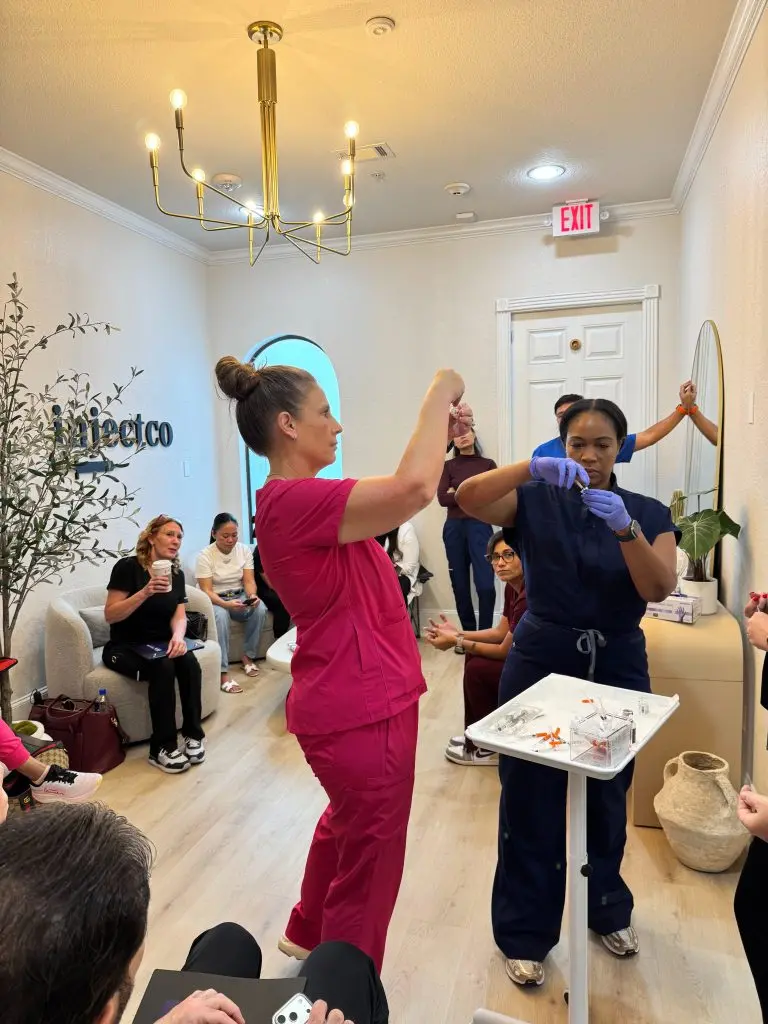
You have finished Botox and dermal filler training, you have treated your first patients, and your confidence is growing. Now the question is what to learn next. Three of the most common next steps for Texas injectors are lip filler, platelet-rich plasma (PRP) and PDO threads. Each one adds something different to your skill set and your treatment menu.
This guide helps you decide whether you’re ready for advanced injector training, what each course teaches, and how to choose the right one first.
Signs You’re Ready for Advanced Training
Advanced courses build on core skills. Before you enroll, you should be able to say yes to most of these:
- You have completed foundational botulinum toxin and dermal filler training with live models.
- You have treated patients regularly since training, under appropriate medical supervision.
- You are comfortable with facial anatomy, including vascular danger zones.
- You know your complication protocol, including when and how hyaluronidase is used to dissolve hyaluronic acid filler.
- Your patients are asking for treatments you can’t offer yet.
If you’re still building core skills, start with our self-paced online Botox training course and a one-on-one hands-on day before moving on.

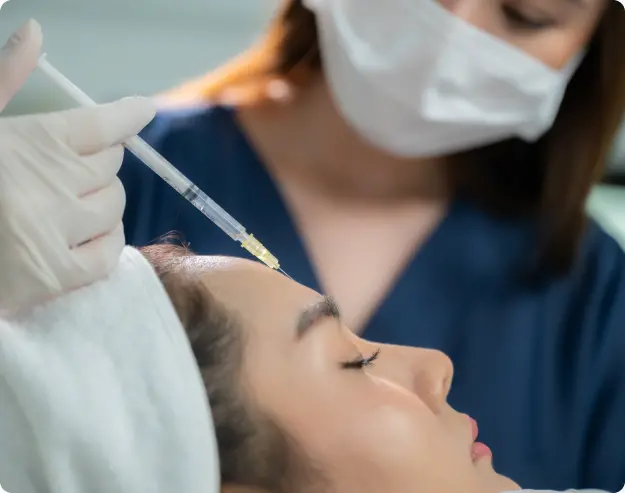
Option 1: Lip Filler Masterclass
Lip augmentation is one of the most requested filler treatments, and one of the least forgiving. Small changes in depth or volume are easy to see, and the lips sit close to important blood vessels.
Our Lip Filler Masterclass is a blended course. You review online modules at your own pace, then attend an in-person day with live demonstrations and supervised injecting on live models. It covers:
- Lip anatomy, vascular pathways and surrounding muscles
- Facial assessment and lip design for natural proportions
- Product selection, injection depth, borders and volume
- Safety and complication management
Best for: injectors whose patients ask about lips, and anyone who wants to refine filler technique in a high-demand area.
Option 2: PRP Injection Training
Platelet-rich plasma uses a concentrate prepared from the patient’s own blood. In aesthetics it is used for skin rejuvenation and hair restoration, and it appeals to patients who prefer treatments based on their own biology.
Our PRP injections training course is available in person (full-day sessions with live demonstrations and hands-on practice) or online through video lessons. Topics include:
- Patient selection and medical assessment
- Blood collection and PRP preparation
- Injection techniques for facial and scalp sites
- Infection control and sterile technique
- Post-treatment care and patient communication
Certification requires a final exam with written and hands-on skills assessment. PRP also opens the door to specialty procedures. Some providers go on to our penile injections training course, which serves a different patient group in men’s health practices.
Best for: injectors interested in skin and hair treatments, and nurses comfortable with blood draws, which includes many ER, L&D and OR nurses.
Option 3: PDO Thread Lift Training
PDO threads are made from polydioxanone, an absorbable suture material. Placed under the skin, threads can lift and support tissue in areas such as the midface, jawline, jowls, brows and neck.
Our PDO thread lift training and certification combines a free virtual lecture portion with one in-person, hands-on day on 3 live models. All supplies and models are provided, and pricing starts at $3,000. You will learn:
- Facial anatomy, including nerve and vascular danger zones
- Thread types: mono, screw, cog, smooth and lifting threads
- Patient selection, consultation and consent
- Complications such as infection, extrusion and asymmetry
- How to combine threads with Botox and fillers
The course is advanced, and we recommend completing foundational Botox and filler training first.
Best for: injectors who enjoy procedural work and want to offer lifting without surgery.
Side-by-Side Comparison
| Lip Filler Masterclass | PRP | PDO Threads | |
| Format | Online modules + in-person day | In person or online | Virtual lecture + 1 in-person day |
| Hands-on | Live models, supervised | Hands-on practice (in person) | 3 live models |
| Builds on | Dermal filler | Phlebotomy, sterile technique | Botox, filler, anatomy |
| Patient demand | Lips | Skin, hair | Lift, jawline, neck |
| Price | Call for pricing | Call for pricing | From $3,000 |
EDITOR NOTE: Confirm prerequisites, schedule and pricing for each course with the training team before publishing. The PRP page mentions CME accreditation while other ITA pages say no CE/CME is offered; confirm before referencing credits anywhere.
How to Choose Your Next Course
Ask yourself three questions:
- What are your patients asking for? The fastest return comes from treatments your current patients already want.
- What does your clinic offer? If your med spa already provides threads, adding PRP or lips may fit better, and the reverse is also true.
- Where are your skills strongest? Filler-confident injectors often go to lips first. Nurses with strong phlebotomy skills often enjoy PRP. Injectors with steady hands and strong anatomy skills tend to do well with threads.
Many injectors take all three over time. There’s no single right order, but it helps to master one before adding the next.
How to Get the Most From an Advanced Course
Advanced training moves quickly, so preparation makes a real difference. A few weeks before your course:
- Review anatomy. Revisit the facial muscles, fat pads and vessels for your chosen area. For lips, focus on the labial arteries. For threads, review the midface and jawline.
- Refresh your complication protocol. Know your steps for vascular occlusion, infection and allergic reaction, and confirm your clinic keeps the right supplies on hand.
- Talk with your medical director. Make sure the new procedure is covered by your standing orders and that your supervising physician supports adding it.
- Plan your first patients. Identify a few existing patients who have asked about the treatment so you can practice soon after training, while the technique is fresh.
- Set up your documentation. Update consent forms, photo protocols and charting templates for the new service.
After the course, start with simple cases and build up. Take photos at every visit, review your results with a mentor when you can, and add more complex cases only once your basic technique is consistent.
Where to Train in Texas
Advanced courses run at selected ITA locations, so ask our team which sites host each course. Our Texas locations include Dallas, Plano, Fort Worth, Colleyville, Argyle, Waxahachie, Austin and The Woodlands.
Remember that scope of practice still applies. In Texas, nurses perform these procedures under physician delegation. Check the Texas Board of Nursing and Texas Medical Board for current rules, and review the FDA’s guidance on dermal fillers before adding lip work.
Frequently Asked Questions
What should I learn after Botox and filler training?
Most injectors choose lip filler, PRP or PDO threads next. The best choice depends on what your patients ask for and which skills you’re strongest in.
Do I need Botox and filler training before PDO threads?
We recommend it. The PDO thread course is advanced and builds on facial anatomy and injection skills learned in foundational training.
Can I take PRP training online?
Yes. ITA offers PRP training in person or online through on-demand video lessons.
Your Next Step
Advanced training is how injectors grow from offering two treatments to building a full practice. Pick the course that matches your patients and your strengths, then talk with our team about dates and locations.
Written by Kiara DeWitt, BSN, RN, CPN, Founder, President and Faculty Instructor at Injector Training Academy.