



If you’re thinking about leaving hospital nursing for aesthetics, you probably have a picture in your head: calm rooms, happy patients and no night shifts. Some of that is true. But a nurse injector’s day also includes careful assessment, detailed charting, hard conversations about expectations and constant attention to safety.
Here is what a typical day looks like for a nurse injector at a Texas med spa, hour by hour, plus what you need to get there.
8:30 a.m. — Morning Huddle and Chart Review
Most med spa days start with a short team huddle. The injector, front desk, aestheticians and practice manager review the schedule, flag new patients, and note anyone with a history of reactions or special requests.
Before the first patient arrives, the injector reviews charts:
- Medical history, medications and allergies
- Previous treatments, product used, units or syringes and lot numbers
- Before-and-after photos from past visits
- Any notes from the supervising physician
This prep work is where acute-care habits help. Nurses from the ER, OR or ICU are used to checking details before they touch a patient.

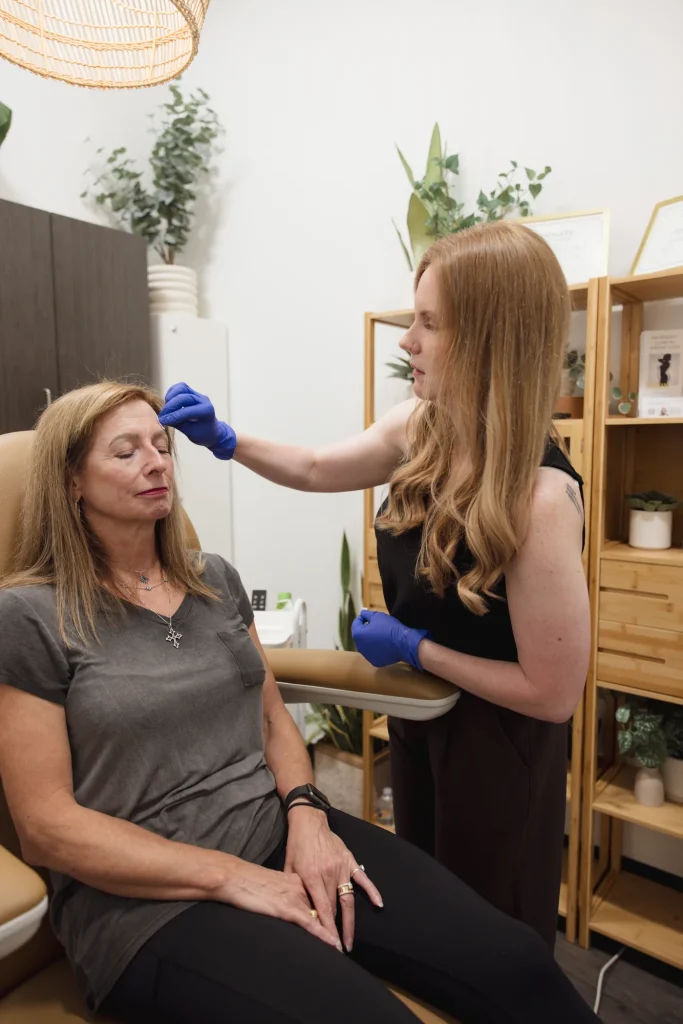
9:00 a.m. — First Consultation
New patients usually start with a consultation. The injector listens to what bothers the patient, examines the face at rest and in motion, and explains what is realistic.
A good consult covers:
- What the patient wants and why
- Contraindications, such as pregnancy, active infection or certain medications
- Treatment options, expected results, downtime and risks
- Cost and how many sessions may be needed
Then comes informed consent. The patient signs, and the injector takes standardized “before” photos. Sometimes the right answer is “not today,” and saying no is part of the job.
9:30 a.m. — Neurotoxin Appointments
Mid-morning is often booked with neurotoxin treatments: forehead lines, frown lines and crow’s feet. These visits are short, but they are not casual.
For each one, the injector:
- Confirms the treatment plan and consent
- Cleans the skin using aseptic technique
- Marks injection points based on the patient’s muscle movement
- Injects measured units of botulinum toxin
- Gives aftercare instructions and books a follow-up
Every product, dose and lot number goes into the chart.
11:00 a.m. — Dermal Filler Appointment
Filler appointments take longer. A lip, cheek or chin treatment with injectable filler involves numbing, careful placement and constant checks for signs of vascular compromise, such as blanching or unusual pain.
Every treatment room should have a complication kit ready, including hyaluronidase for hyaluronic acid fillers, and the injector should know the clinic’s emergency protocol by heart. The FDA’s dermal filler page lists the known risks every injector should be able to explain.
12:30 p.m. — Lunch, Follow-Ups and Messages
Lunch often doubles as admin time. Injectors return patient messages, check in on two-week follow-ups, and answer questions like “Is this bruise normal?” Clear, quick communication is what turns first-time patients into regulars.
1:30 p.m. — Afternoon Treatments
Afternoons may include more neurotoxin and filler, plus other services depending on the clinic’s menu and the injector’s training, such as PRP, PDO threads or microneedling. Many injectors add these advanced skills over time.
4:00 p.m. — Two-Week Reviews and Touch-Ups
Follow-up visits let the injector compare before-and-after photos, check symmetry and decide whether a small touch-up is needed. These visits are also how injectors learn. Seeing how each patient responded makes the next treatment better.
5:30 p.m. — Charting, Inventory and Wrap-Up
The day ends with documentation. Charts must be complete before the injector leaves: treatment areas, units or volume, lot numbers, photos and any adverse events. The injector may also log product use, check inventory and restock rooms for the next day.
Who’s in Charge? Supervision in Texas
Nurse injectors in Texas don’t work alone. Registered nurses perform these treatments under physician delegation, with a supervising physician and standing orders in place. Licensing questions go to the Texas Board of Nursing, and delegation rules are set by the Texas Medical Board. Many clinics work with a partner such as Medical Director Co. to arrange medical director placement.
How the Day Changes Over Time
A new injector’s schedule looks different from an experienced injector’s. In the first months, appointments are usually longer, with more time built in for consults and questions. Many clinics pair new injectors with a senior injector or the medical director for the first treatments, and some start new hires on neurotoxin before adding filler. As skills and confidence grow, the schedule fills with repeat patients, more complex cases and new services. Over a few years, many injectors take on training newer staff, building treatment protocols or helping the clinic decide which services to add.
What Surprises New Injectors Most
- How much talking there is. Consults and follow-ups take more time than the injections.
- How much charting there is. Documentation is just as strict as in the hospital.
- How personal it feels. Patients return every few months, so you build long relationships.
- How much you keep learning. Anatomy, products and techniques keep evolving.
EDITOR NOTE: Optional: add a short quote from an ITA trainer or graduate about their typical day. Use their real words with written consent.
Skills You Need for This Job
- An active RN, NP, PA or physician license
- Facial anatomy, including vascular danger zones
- Product knowledge for neurotoxins and fillers
- Consultation and expectation-setting skills
- Complication recognition and response
- Accurate, detailed documentation
How to Get There
Most new injectors start with structured training, then build hands-on experience. At Injector Training Academy, both programs are one-on-one:
- Injector Certification Program: an online course plus a one-on-one hands-on day with 3 neurotoxin and 3 filler models.
- Aesthetic Injector Internship: 12 weeks, 80+ hours of one-on-one training, 6 neurotoxin and 6 filler models, and unlimited shadowing at all nine locations. Shadowing lets you see days like this one before you have your own schedule.
Start with our self-paced online Botox training course, then book hands-on training close to home. We train in Dallas, Fort Worth, Plano, Colleyville, Argyle, Waxahachie, Austin and The Woodlands.
Once you’re comfortable with the basics, specialty courses such as our penile injections training course can expand what your day includes. To see which roles exist in a typical clinic, read our guide to med spa positions.
Frequently Asked Questions
What does a nurse injector do day to day?
A nurse injector consults with patients, performs neurotoxin and filler treatments, takes before-and-after photos, handles follow-ups and documents every treatment, all under a supervising physician.
Do nurse injectors work weekends?
It depends on the clinic. Many med spas offer evening or Saturday appointments, but most schedules are daytime and far more predictable than hospital shifts.
How many patients does a nurse injector see in a day?
It varies by clinic, appointment type and experience. New injectors usually start with a lighter schedule and longer appointments.
Ready to See It for Yourself?
The best way to know whether this career fits is to watch it up close. Explore our programs, ask about shadowing, and see a real day at a Texas med spa before you commit.
Written by Kiara DeWitt, BSN, RN, CPN, Founder, President and Faculty Instructor at Injector Training Academy.
Disclaimer
Medical Disclaimer: The content on this page is for general educational and informational purposes only. It is intended for licensed healthcare professionals and is not medical, legal or financial advice. It is not a substitute for professional clinical judgment, and it is not meant for patients to use when making treatment decisions. Aesthetic procedures, including neurotoxin, dermal filler, PRP and PDO thread treatments, carry risks and must be performed only by appropriately licensed professionals within their scope of practice and under the medical supervision required in their state. Scope of practice, delegation and supervision rules vary by state and change over time, so confirm current requirements with your state licensing board, such as the Texas Board of Nursing or Texas Medical Board. Completing a training course or receiving a Certificate of Completion does not grant a license or expand your legal scope of practice, and it does not guarantee employment, income or specific clinical results. Links to outside websites are provided for reference only and do not imply endorsement. Information is accurate to the best of our knowledge at the time of publishing.