


If you are an RN or NP looking at the medical weight loss boom and wondering whether you can open your own clinic in Texas, the honest answer is: yes, you can build and own the business — but not the way most people assume. Texas draws a hard line between owning a company and owning a medical practice, and nurses who ignore that line put their license and their investment at risk. Here is how the structure actually works, what you can and cannot do clinically, and why so many nurse-owned clinics in Texas pair weight management with aesthetic injectables. At Injector Training Academy , we work with career-changing nurses through this transition every week.
The Short Answer
A nurse can start, own, and operate the business entity behind a weight loss clinic in Texas. A nurse cannot own the clinical entity that delivers medical care. Texas follows the corporate practice of medicine doctrine, which restricts ownership and control of a medical practice to licensed physicians. Because prescription weight loss medications, lab-based evaluations, and injections are all the practice of medicine, the clinical side of your clinic must sit inside a physician-owned entity with genuine physician oversight.
How the Ownership Structure Actually Works
The standard compliant model is a two-entity structure. You form a management company — usually a limited liability company registered with the Texas Secretary of State — that you own outright. That management services organization (MSO) holds the lease, the equipment, the brand, the marketing, the software, the staffing, and the non-clinical operations. A separate professional entity, owned by a licensed physician, employs or contracts the clinical providers and holds the patient relationship. The two are connected by a written management services agreement with fair-market-value compensation and no fee splitting.
Done properly, this is the dominant model across Texas aesthetic and wellness clinics. Done casually — a handshake medical director, a percentage-of-revenue payment, a physician who never reviews a chart — it becomes an enforcement problem with the Texas Medical Board. Have a Texas healthcare attorney paper the structure before you sign a lease. This article is educational and is not legal advice.

What You Can Do Clinically as an RN
An RN in Texas cannot diagnose obesity, order a treatment plan, or prescribe medication. Under the Nursing Practice Act and Texas Board of Nursing rules, you can perform delegated medical acts — administering injections, drawing labs, patient education, follow-up assessments — when a physician has delegated them under Texas Occupations Code Chapter 157 with signed written orders and documented training.
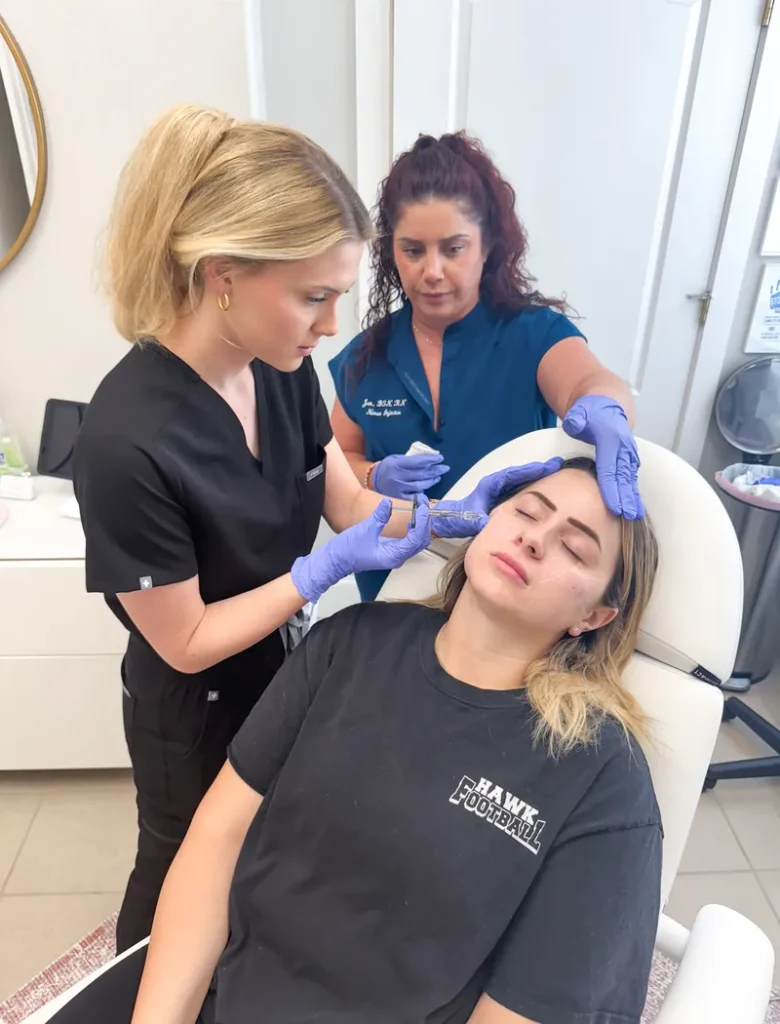
That last phrase matters. Documented, hands-on training is what makes delegation defensible. Nurses moving into this space typically start with formal rn injector training so their credentials file holds up to scrutiny. Physician assistants follow a parallel path through PA-specific injectable training.
What Changes if You Are an NP
Texas is a restricted practice state. A nurse practitioner can evaluate patients and prescribe weight loss medications, but only under a written prescriptive authority agreement with a delegating physician, reviewed at least annually, with defined drug categories, chart review, and an emergency plan. Full prescriptive independence does not exist here, and an NP generally cannot serve as the medical director of record. What an NP can do is own the MSO, be the clinical face of the practice, and build real equity in the brand.
Delegation, Good Faith Exams, and the 2025 Rule Reorganization
In January 2025 the Texas Medical Board reorganized its delegation rules, moving the old nonsurgical cosmetic procedure rule into a new chapter of the Texas Administrative Code. The substance survived: cosmetic and medical procedures remain the practice of medicine, a qualified provider must perform a good faith examination before treatment, written orders must be signed and reviewed, someone trained in basic life support must be onsite, staff must wear credential identification, and the delegating physician’s name and license number must be posted in public and treatment areas. Elective IV therapy picked up its own separate requirements in 2025, so if you plan to offer hydration drips alongside weight management, check current Texas DSHS guidance before launch.
Medications and Sourcing
Weight loss clinics live or die on their pharmacy relationships. Anti-obesity medications must be prescribed by an authorized prescriber for an appropriate patient after a real evaluation, and dispensed through a state-licensed pharmacy. The FDA has published specific concerns about unapproved and compounded GLP-1 products, including marketing claims and sourcing. Treat your supply chain as a compliance decision, not a margin decision, and keep marketing language away from guaranteed results.
The Business Layer
Beyond structure, budget for the unglamorous work: an EIN, a business bank account, professional liability coverage that names your scope accurately, HIPAA-compliant charting and telehealth, a CRM that tracks refill cadence, sharps and biohazard disposal, and clean documentation of intake criteria including BMI and comorbidities. Most nurse-owned clinics open lean, in 600 to 1,200 square feet, and grow on retention rather than acquisition.
Why Injectables Belong in the Same Room
Here is the practical reason nurses rarely build weight-loss-only clinics: the patient who books a monthly weight management visit is the same patient who asks about her forehead lines. Adding neurotoxin and filler services turns a single-service clinic into a recurring-revenue aesthetics practice with two demand curves instead of one, using the same room, the same chart, and the same delegation framework. It is also the fastest way to raise average revenue per patient without adding square footage.
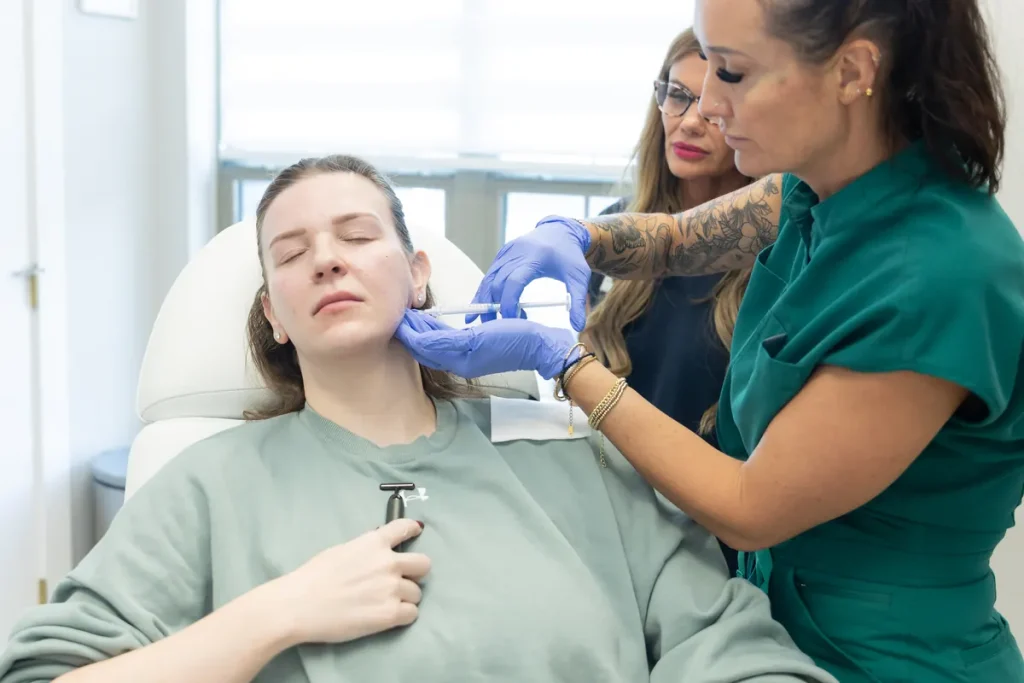
That is where training becomes a business decision. Our hands-on injectable courses place live models in front of you rather than mannequins, and our lip filler training in Texas covers the requests your weight loss patients will make first. If you are still comparing programs, our guide to Botox certification cost and how to choose a program breaks down what you should and should not pay for, and our best online Botox training lets you complete didactics before your clinical day.
Where to Train in Texas
We run botox training texas courses across the state, so you can train close to the market you plan to open in. Choose from Fort Worth, Dallas, Plano, Argyle, Colleyville, Waxahachie, Austin, and The Woodlands. Austin-area nurses researching local market rates can also review our affordable Botox in Austin, TX page, and a full schedule sits on our training locations page.
Courses are led by practicing clinicians, including Kiara DeWitt, BSN, RN, CPN and Jen Adams, BSN, RN, who have built and staffed clinics of their own and can tell you what the first ninety days actually look like.
Your Realistic Path Forward
Find a delegating physician who will genuinely engage. Have an attorney build the MSO and professional entity. Complete documented injectable training. Write your protocols before you open the doors, not after your first complication. Nurses who do those four things in that order tend to launch on time and stay open.
This article is general information for licensed clinicians and is not legal, tax, or medical advice. Requirements change; verify current rules with the Texas Medical Board, the Texas Board of Nursing, and a Texas healthcare attorney before opening a clinic. Individual results from any medical treatment vary.