Most medical professionals start their aesthetic journey with online Botox training. You learn fundamentals without live patients watching. You absorb anatomy at your own pace.
But finishing an online course leaves many providers with the same question: Am I actually ready to inject real patients?
Some providers wait too long and lose momentum. Others rush into hands-on practice without adequate preparation. Neither approach works.
A clear learning path exists from online education to confident independent practice. Understanding this pathway helps you progress with confidence instead of second-guessing every decision.
Why Online Training Usually Comes First
Botox requires understanding complex anatomy before you ever hold a needle. The facial vessels, nerve pathways, and muscle interactions aren’t intuitive.
Online Botox training builds this foundation without putting patients at risk. You learn:
- Facial anatomy and muscle dynamics
- Why injection placement matters for specific outcomes
- Vascular landmarks and high-risk zones
- Patient selection and contraindications
- Documentation standards and photography protocols
This preparation makes hands-on training safer and more effective. You arrive ready to focus on technique instead of scrambling with basic concepts.
What Proper Online Training Actually Covers
Strong online education goes beyond memorizing injection maps. It builds the foundation for safe clinical practice.
Safety Protocols and Risk Recognition
Every treatment area carries specific anatomical risks:
- Glabella sits near orbital vessels
- Crow’s feet injections can affect smile mechanics
- Forehead treatments influence brow position and can cause ptosis
- DAO injections risk smile weakness if placed incorrectly
Online training teaches you to identify these risks before entering a treatment room. You learn which patients require extra caution. You understand when medical history disqualifies someone. You recognize anatomical variations that change your approach.
Clinical Judgment and Treatment Planning
Strong online courses develop decision-making through case scenarios. You learn:
- How to evaluate faces systematically
- When factors like age and metabolism influence dosing
- Why muscle strength affects unit requirements
- When to modify standard approaches
- How treating one area affects others
This clinical thinking matters more than injection technique. You’re not following generic protocols. You’re making customized decisions for individual patients.
Documentation That Protects You
Professional injectors document everything. Online courses teach:
- Photography angles that capture treatment areas properly
- Charting requirements for every treatment
- What to record: units per site, dilution ratios, lot numbers
- How to set realistic expectations about onset and duration
Proper documentation protects your practice legally. It also helps you refine technique by tracking what works.
When You’re Ready for Hands-On Training
Moving to live patient practice requires demonstrated understanding of core concepts. Ask yourself:
- Can I explain facial anatomy without notes?
- Do I recognize high-risk areas immediately?
- Can I identify contraindications quickly?
- Do I understand treatment planning principles?
- Do I know when cases exceed my skill level?
If basic concepts still feel uncertain, you need more online review. Rushing into hands-on practice with knowledge gaps creates problems.
You’re ready when anatomy becomes intuitive. You look at faces and see muscle patterns automatically. You understand why each injection point matters.
What Happens During Hands-On Training
Live patient training converts theoretical knowledge into practical skill. You learn what proper injection depth feels like. You understand tissue resistance.
Supervised Patient Treatments
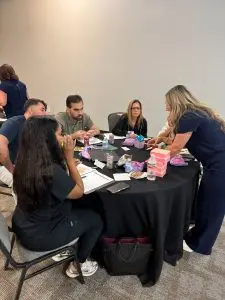
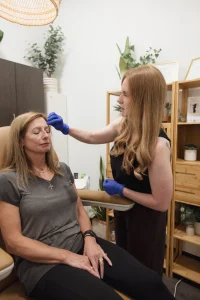
Hands-on training puts you in treatment rooms with actual patients under instructor supervision. They:
- Guide your hand positioning
- Correct your angle in real time
- Help you adjust technique immediately
- Catch errors before they become habits
This supervision matters because every face differs. Each patient responds differently. You need expert guidance to navigate these variations safely.
Immediate Correction and Feedback
Training value comes from correction, not just repetition. Through supervised practice you learn:
- Injection depth control
- Hand positioning that creates consistent results
- Muscle memory that makes technique natural
- Patient management and comfort techniques
These skills only develop through supervised practice. Online training prepared your mind. Hands-on training prepares your hands.
Building Actual Confidence
Real confidence comes from successfully treating patients under supervision. Each successful treatment:
- Builds trust in your technique
- Shows you what proper results look like
- Teaches you to manage unexpected situations
- Develops your clinical decision-making
You know you can handle complications because you’ve practiced them with expert guidance.
How Online and Hands-On Training Work Together
These training stages complement each other by design:
Online training:
- Prepares your mind
- Builds anatomical understanding
- Teaches safety principles
- Develops clinical reasoning
Hands-on training:
- Develops technical skills
- Builds clinical experience
- Refines patient interaction
- Creates muscle memory
Providers who complete thorough online training get more value from hands-on sessions. They focus on technique refinement instead of struggling with fundamentals.
The Botox Certification Pathway
Botox certification follows a structured pathway. Understanding this helps you plan realistic timelines.
Stage One: Foundational Education
Certification pathways typically begin with online training where you:
- Study anatomy and muscle dynamics
- Learn injection theory and safety principles
- Develop clinical decision-making frameworks
- Understand contraindications and complications
This stage prepares you intellectually for hands-on practice.
Stage Two: Supervised Practice
Certification requires live injection experience under supervision:
- Practice on actual patients
- Demonstrate competency across treatment areas
- Show consistent technique
- Display sound clinical judgment
Online training prepares you to succeed at this stage. You arrive ready to focus on skill development.
Stage Three: Ongoing Competency
Certification isn’t the finish line. Safe injectors:
- Stay current with techniques and research
- Refine skills through ongoing practice
- Learn from complications and adjust approaches
- Commit to continuous education
This commitment separates professionals from casual providers.
Common Mistakes When Rushing the Process
Some medical professionals shortcut the learning pathway. Understanding these mistakes helps you avoid them.
Underestimating Aesthetic Anatomy Requirements
Your medical or nursing degree taught general anatomy. Aesthetic injection requires specialized knowledge:
- Facial muscles in motion
- Vascular danger zones
- Anatomical variations affecting treatment
- Nerve pathways and sensory considerations
Providers who skip proper anatomy preparation make preventable errors. They miss safety cues. They risk patient complications.
Confusing Confidence With Competence
Watching training videos creates intellectual understanding. This can feel like readiness. But understanding concepts doesn’t mean you can execute them safely.
Real competence requires:
- Supervised practice with feedback
- Experience with tissue resistance
- Adjustments for different facial structures
- Managing unexpected situations with guidance
Confidence without demonstrated competence leads to poor outcomes.
Treating Injection as Pure Technique
Botox injection is clinical work. You’re evaluating individual patients and making customized decisions, not following injection maps.
Providers who approach training as pure technique struggle with:
- Selecting appropriate candidates
- Identifying contraindications
- Adjusting approaches for different patients
- Managing complications appropriately
Clinical judgment develops through proper education and supervised experience.
How TAMA Structures the Learning Pathway
Texas Academy of Medical Aesthetics built training around progressive skill development:
- Online training establishes foundations
- Hands-on training develops technique
- Ongoing education maintains competency
The philosophy is straightforward: prepare thoroughly before practicing. Practice under supervision before working independently. Continue learning throughout your career.
This produces injectors who understand their work and make sound clinical decisions.
Your Timeline From Education to Independent Practice
No universal timeline exists. Your advancement depends on:
- How quickly you absorb anatomical concepts
- How much supervised practice you’re getting
- How complex your initial cases are
- How honestly you assess your skill level
Most providers spend several weeks on online education. They complete hands-on training after demonstrating readiness. They continue refining skills over months through practice and mentorship.
Advance when you’re genuinely ready, not when schedules dictate.
Frequently Asked Questions
Can you go from online Botox training to hands-on practice?
Yes, but hands-on practice must occur under supervision after completing foundational education. Online training prepares your mind. Supervised hands-on training develops practical skills safely.
Do you need online training before hands-on Botox training?
While not always mandatory, online training helps you approach hands-on sessions prepared. You understand anatomy and safety principles. You can focus on technique instead of basic concepts.
How long after online Botox training should you do hands-on training?
Once you understand anatomy, safety, and injection theory without referencing materials. No fixed timeline exists. Advance when you can answer fundamental questions confidently.
Is hands-on Botox training required to inject patients?
Yes. Hands-on supervised training is required before independent patient work. Online education alone doesn’t prepare you for live treatments.
What is the safest path to becoming a Botox injector?
Online education followed by supervised hands-on training and ongoing learning. This progression protects patients while building genuine competence.
Moving Forward With Proper Preparation
The path from online Botox training to independent practice is clear:
- Start with a thorough online education
- Transition to supervised hands-on training when prepared
- Practice under guidance until you demonstrate consistent competency
- Continue learning throughout your career
This progression protects patients and builds lasting confidence. It creates injectors who succeed long-term.
Medical professionals who follow structured pathways enter aesthetic practice properly prepared. They understand anatomy. They recognize risks. They think clinically. They inject safely.
Proper training protects your patients and your professional reputation. It makes you the kind of injector patients trust and refer to others.