


TAMA’s registered nurse Botox training program is designed to empower nurses with the skills and knowledge needed to succeed in aesthetic medicine.
The demand for cosmetic injectables is growing. Neuromodulator injections (including Botox treatments) rose from 8.7 million in 2022 to 9.48 million in 2023, according to the 2023 ASPS Procedural Statistics Report.
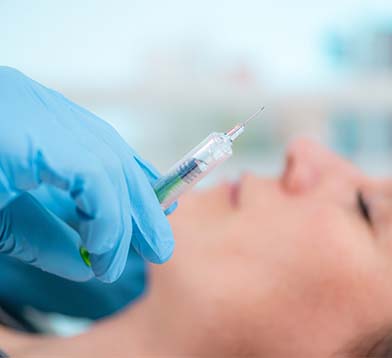
TAMA’s nurse injector courses are structured to help registered nurses build the clinical and aesthetic skills necessary for a successful career in medical aesthetics.

TAMA offers a full spectrum of Botox certification for RNs, from foundational classes to advanced hands-on techniques.

Completing the certification opens the door to an exciting, fast-growing field. Aesthetic medicine allows nurses to use their clinical expertise in a more creative, patient-focused setting while expanding their income potential and career mobility.


Whether you prefer learning in person or online, our Botox training courses are designed for flexibility, accessibility, and support—no matter where you’re located.
Our online classroom option features self-paced lectures that can be accessed anytime, even after course completion. We also offer in-person, hands-on training. Nurses and licensed professionals from across the U.S. regularly travel to attend our live sessions. Both formats offer the same high-quality curriculum, expert instruction, and full certification eligibility.
All in-person and online courses qualify for payment plans, making it easier to start your training without financial stress. We’ve partnered with Affirm to offer flexible financing options, so you can begin learning now and pay over time.

TAMA supports graduates in establishing properly structured delegation and supervision agreements tailored to Botox and dermal filler administration. These agreements comply with state regulations and clearly define procedural authority, clinical responsibilities, and physician oversight.
Join the growing number of professionals advancing their careers through TAMA’s registered nurse Botox training and become a confident, certified injector.

To get certified, a registered nurse must enroll in an accredited Botox training program that includes both classroom instruction and hands-on practice with live patients.
After completing the course and any required assessments, the RN receives a certification. It’s also essential to comply with state regulations regarding supervision and scope of practice.
Yes, an RN can become an aesthetic nurse by completing specialized training in procedures like Botox and dermal fillers.
Many RNs transition into aesthetic medicine to work in medspas, dermatology clinics, or plastic surgery offices. Certification and experience help build credibility in this field.
While an RN can perform many advanced aesthetic procedures that estheticians cannot, they must still follow state laws.
In most cases, an RN does not need an esthetician license to perform injectables like Botox but cannot perform certain cosmetic treatments reserved for licensed estheticians without dual licensure. Always check with your state board for specific regulations.
Each location provides personalized guidance for injector training, helping you build skills, confidence, and a thriving practice.
INSIDE BIRTHCO,8312 Burnet Rd 107 #B,Austin, TX 78757
(512) 599-8978
2660 FM 407 100 #B,Bartonville, TX 76226
(940) 784-6822
6222 Colleyville Blvd # B,Colleyville, TX 76034
(817) 768-9230
2520 N Carroll Ave B,Dallas, TX 75204
(214) 644-7323
INSIDE MATTISON AVE SUITES,4701 West Fwy Suite 152 #B,Fort Worth, TX 76107
(817) 886-8177
Inside of Phenix Suites of Willow Bend,5964 W Parker Rd Suite 107 #B,Plano, TX 75093
(972) 781-9340
250 Ed English Dr 3D B,Shenandoah, TX 77380
(281) 825-4203
The demand for cosmetic injectables is growing. Neuromodulator injections (including Botox treatments) rose from 8.7 million in 2022 to 9.48 million in 2023, according to the 2023 ASPS Procedural Statistics Report.
There’s never been a better time for nurses to enter the field.
A comprehensive curriculum covering Botox science, facial anatomy, patient consultation, and treatment planning
Training designed specifically for RNs, building on your existing clinical and anatomical knowledge
Emphasis on safety protocols, infection control, and ethical considerations
Up-to-date information on state-specific regulations and the legal scope of practice
Guidance on setting up or expanding a practice within the aesthetics industry
Certification upon successful completion for professional credibility
Supervised, live-model injection practice using FDA-approved neurotoxins
Instructions on proper needle placement, depth, and dosage for various treatment areas
Techniques for minimizing pain, bruising, and adverse effects
Focus on achieving natural, symmetrical results for patient satisfaction
Real-time feedback from certified aesthetic nurse educators
Coverage of complication management and corrective procedures
Key differences between Botox (a neuromodulator) and dermal fillers (volume enhancers)
How to select the right product and treatment plan based on patient goals and facial structure
Techniques for safe and effective administration of hyaluronic acid-based fillers
Managing complications such as vascular occlusion or asymmetry
Combining Botox and fillers for full-face rejuvenation strategies
A deep understanding of facial structures is essential to ensure safe, effective injections.
Anatomy essentials
Injection site mapping
Dose optimization
Adverse event prevention
Real-world experience under supervision builds confidence and clinical competence.
Direct injection practice
Treatment diversity
Mentored feedback loop
Comprehensive injection sessions
Beginner Botox courses for nurses are tailored for medical professionals new to aesthetic medicine. These classes lay a strong foundation in the science, safety, and artistry of cosmetic injectables.
Basic facial anatomy
Introduction to neurotoxins
Safe injection protocols
Patient consultation basics
Managing side effects
Hands-on training with live patients in common areas
Midface and lower-face rejuvenation
Off-label Botox applications
Full-face aesthetic planning
Complication management
Cannula techniques
Anatomy masterclasses
Increased earning potential—experienced nurse injectors can earn $90,000 to $140,000+ annually.
Access to a rapidly growing market—nonsurgical cosmetic procedures rose by 73% between 2019 and 2023
Opportunity to work independently or as part of a specialized team
Ability to pursue continued education through advanced courses
Flexibility in work schedule and patient load
Potential to open or co-manage a medical aesthetics practice
Higher job satisfaction through creative and results-driven patient interactions
Improved work-life balance with flexible hours and appointment-based scheduling
Reduced burnout compared to high-stress hospital environments
Growing demand—Botox remains the #1 nonsurgical cosmetic treatment, with over 8 million procedures in the U.S. in 2023
Desire for long-term professional development in a thriving, innovation-driven industry
Increased autonomy and leadership opportunities through private practice and consulting
Medical spas
Dermatology clinics
Plastic surgery offices
Luxury wellness centers
Private practice
Aesthetic trainers or consultants