The hum of ventilators, the relentless 12-hour shifts, the emotional weight of critical care :- many Intensive Care Unit (ICU) nurses in Texas eventually reach a turning point. They love nursing, but the burnout is real. If you’re an ICU nurse in the Lone Star State daydreaming about a calmer, more creative, and financially rewarding career, you’re not alone. Thousands of Texas RNs are pivoting toward one of the fastest-growing healthcare specialties in the country: aesthetic injector.
This guide walks you through exactly how to transition from the ICU bedside to a thriving career as a Botox and dermal filler injector in Texas:- including the legal requirements, training pathways, salary expectations, and where to start.
Why ICU Nurses Make Exceptional Aesthetic Injectors
ICU nurses already possess what aesthetic clinics desperately need. You understand pharmacology, anatomy, sterile technique, and emergency response. You can place an IV in a difficult vein, recognize an allergic reaction in seconds, and remain calm under pressure. These skills translate directly into safe, confident injection practice.
In aesthetics, complications like vascular occlusion or anaphylaxis are rare: but when they occur, having a former critical care nurse at the syringe is a tremendous patient safety advantage. Med spa owners actively recruit ICU and ER nurses because they handle adverse events with skill that newer grads simply don’t have.
Step 1: Confirm Your Texas Licensure Eligibility
Before anything else, verify your credentials with the Texas Board of Nursing. To legally administer cosmetic injectables in Texas, you must hold an active, unencumbered Registered Nurse (RN), Nurse Practitioner (NP), or Advanced Practice Registered Nurse (APRN) license.
Under Texas law, cosmetic injections like Botox and dermal fillers are considered the practice of medicine. That means RNs must work under a delegated, written protocol from a supervising Texas-licensed physician — known as a medical director:- as governed by the Texas Medical Board. The physician must perform a “good faith exam” on each patient (in person or via telemedicine), order the treatment, and remain available for consultation.
The good news? Most ICU nurses already meet the licensing baseline. You don’t need a new degree — just specialized injector training.
Step 2: Complete an Accredited Botox and Filler Training Program
This is where your career pivot truly begins. A reputable injector training program teaches facial anatomy, neuromodulator pharmacology, injection techniques, complication management, and patient consultation — none of which are covered in standard ICU practice.
Texas offers exceptional in-person training options across every major city:
- In North Texas, consider Botox training in Fort Worth or specialized courses in Argyle for a smaller-class experience.
- The Dallas–Plano corridor offers premier options like Botox training programs in Dallas and Plano, along with boutique training in Colleyville and Waxahachie.
- Central and South Texas nurses can train through Botox courses in Austin or The Woodlands near Houston.
If your schedule is still tied to bedside nursing, a self-paced online Botox training program lets you build foundational knowledge before attending a live hands-on workshop. This is the most efficient way to study pharmacology, dosing, and facial anatomy on your ICU breaks or days off.
Step 3: Build Hands-On Experience with Live Models
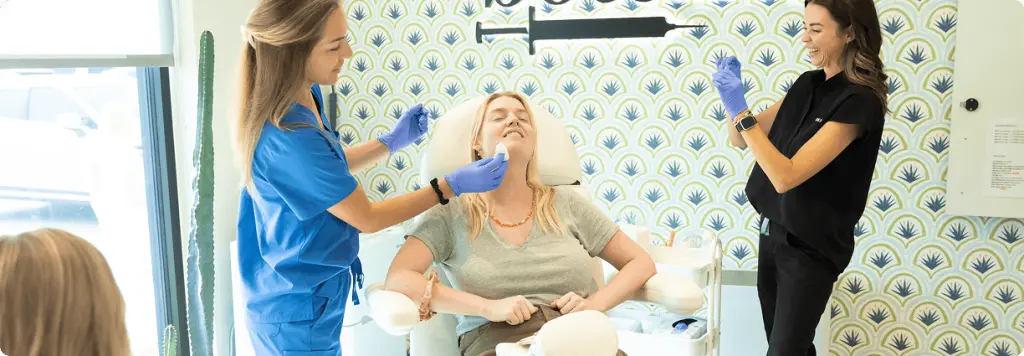
Classroom learning isn’t enough. Texas med spas want injectors who have actually held a syringe and treated live patients under expert supervision. The best courses include hands-on practice with real models :- covering Botox for forehead lines, glabellar wrinkles, crow’s feet, and dermal filler placement in lips, cheeks, and nasolabial folds.
Many ICU nurses also expand their service menu with advanced certifications such as penile injection training for men’s health and wellness practices: a high demand niche with strong earning potential and minimal competition.
Step 4: Find Your First Aesthetic Position
With certification in hand, start applying to medical spas, dermatology clinics, plastic surgery offices, and physician-owned aesthetic practices. Many ICU nurses begin part-time, keeping a few hospital shifts while building injector experience and clientele.
When evaluating job offers, look beyond hourly pay. The most lucrative aesthetic positions in Texas offer commission structures — typically 10–20% of services performed — on top of a base salary. Strong communicators with an artistic eye often double their income within two to three years through retention, referrals, and retail product sales.
Salary Expectations: What Texas Injectors Actually Earn
Compensation is one of the biggest draws of this career pivot. According to current market data, aesthetic nurse injectors in Texas earn between $90,000 and $130,000 annually, with top performers in Dallas, Austin, and Houston exceeding $150,000. Add commission, bonuses, and tip income, and experienced injectors at high-volume clinics can reach $200,000+.
Compare that to the average Texas ICU nurse salary of $75,000–$95,000 — without the night shifts, weekends, holidays, or emotional toll. The U.S. Bureau of Labor Statistics projects continued strong demand for registered nurses through 2033, and the aesthetic sector is growing even faster than general nursing.
Step 5: Understand the Business Side
Aesthetics is part medicine, part art, part business. Successful injectors invest in photography, social media (especially Instagram and TikTok), branded marketing, and client retention systems. Many ICU nurses are surprised to discover how much patient relationships matter — your clients return every three to four months for years, becoming part of your professional community.
You’ll also need to understand compliance basics: HIPAA, informed consent, medical record-keeping, and proper documentation of medical director oversight. These are non-negotiable under both Texas Medical Board and Texas Board of Nursing rules.
Common Challenges (and How to Overcome Them)
The biggest hurdle most ICU-to-aesthetic transitioners face isn’t clinical — it’s identity. Hospital nursing carries a sense of life-saving purpose that aesthetics seems to lack on the surface. But injectors will tell you that giving patients renewed confidence, helping cancer survivors feel whole again, or smoothing the worry lines of overwhelmed caregivers carries its own meaningful reward.
The other common challenge is impostor syndrome with a syringe in a non-emergency context. Comprehensive training, mentorship, and starting slowly with conservative dosing solve this quickly.
Your Texas Career Transition Starts Today
The shift from ICU nurse to aesthetic injector is one of the most rewarding career pivots available to Texas nurses in 2026. You keep your nursing license, leverage your clinical strengths, escape burnout, and step into a creative, financially lucrative profession with explosive growth.
The first step is simple: choose a high-quality training program in your area and commit to the transition. Whether you start with online Botox training or jump straight into a hands-on Texas workshop, your new career is closer than you think.
Texas’s beauty industry is booming — and ICU nurses, with their unmatched clinical foundation, are the injectors med spas want most. Your skills saved lives in the unit. Now let them build a life you actually love.
Frequently Asked Questions
1. Can an ICU nurse become an aesthetic injector in Texas?
Yes. Any Texas-licensed Registered Nurse (RN), Nurse Practitioner (NP), or Advanced Practice Registered Nurse (APRN) — including ICU nurses — can become an aesthetic injector after completing an accredited Botox and dermal filler training program. ICU nurses are especially valued in aesthetics because of their advanced clinical skills, pharmacology knowledge, and emergency response training.
2. How long does it take to transition from ICU nursing to aesthetic injecting in Texas?
If you already hold an active Texas RN license, the transition typically takes 2 to 4 months. This includes completing a foundational training course (online or in-person), attending a hands-on workshop with live models, and securing your first med spa position. Nurses who train part-time alongside ICU shifts often transition within 6 months.
3. Do I need a special license to inject Botox in Texas?
No separate license is required, but Texas law mandates that RNs work under a written delegation agreement with a Texas-licensed physician (medical director). The physician must perform a good-faith exam on each patient and order the treatment. You’ll also need certified training in injection techniques, facial anatomy, and complication management.
4. How much do aesthetic nurse injectors make in Texas?
Aesthetic nurse injectors in Texas earn an average of $90,000 to $130,000 per year, with top performers in Dallas, Austin, and Houston exceeding $150,000 annually. Commission-based pay structures, retail product sales, and tips can push experienced injectors past $200,000. Salaries vary by city, experience, and clinic volume.
5. Can ICU nurses work part-time as aesthetic injectors while keeping their hospital job?
Absolutely. Many Texas nurses transition gradually by working PRN ICU shifts while building their aesthetic clientele. This hybrid approach reduces financial risk during the transition and lets you test the field before going full-time. Most med spas offer flexible scheduling that pairs well with hospital nursing.
6. What’s the best Botox training program for ICU nurses in Texas?
The best training program depends on your location and learning style. In-person hands-on courses are available in Dallas, Fort Worth, Austin, Plano, Colleyville, Argyle, Waxahachie, and The Woodlands. Nurses with packed schedules often start with a self-paced online Botox training course and follow up with a live workshop.
7. Is aesthetic injecting safer than ICU nursing?
Aesthetic injecting is generally lower-risk than critical care nursing in terms of life-or-death emergencies, but it carries its own clinical risks — including vascular occlusion, allergic reactions, and aesthetic complications. ICU nurses transition particularly well because they’re trained to recognize and respond to these rare but serious events quickly.
8. Can I open my own med spa in Texas as an RN?
RNs cannot independently own a med spa that offers medical services in Texas due to corporate practice of medicine laws. However, you can partner with a physician owner, become an employed injector, or operate under a Management Services Organization (MSO) structure. Nurse Practitioners and APRNs have somewhat broader options but still require physician collaboration for most aesthetic procedures.
9. Do aesthetic injectors need continuing education in Texas?
Yes. As a licensed RN, you must complete the Texas Board of Nursing’s continuing education requirements to maintain your license. Most reputable aesthetic injectors also pursue advanced certifications annually to learn new techniques, products (like newer neuromodulators and biostimulators), and complication management protocols.
10. What’s the job outlook for aesthetic injectors in Texas?
Excellent. The U.S. Bureau of Labor Statistics projects strong demand for registered nurses through 2033, and the aesthetic medicine sector is growing even faster — driven by increased social media influence, expanded male clientele, and demand for preventative “tweakments” among younger patients. Texas’s booming population in DFW, Austin, and Houston makes it one of the strongest aesthetic markets in the country.