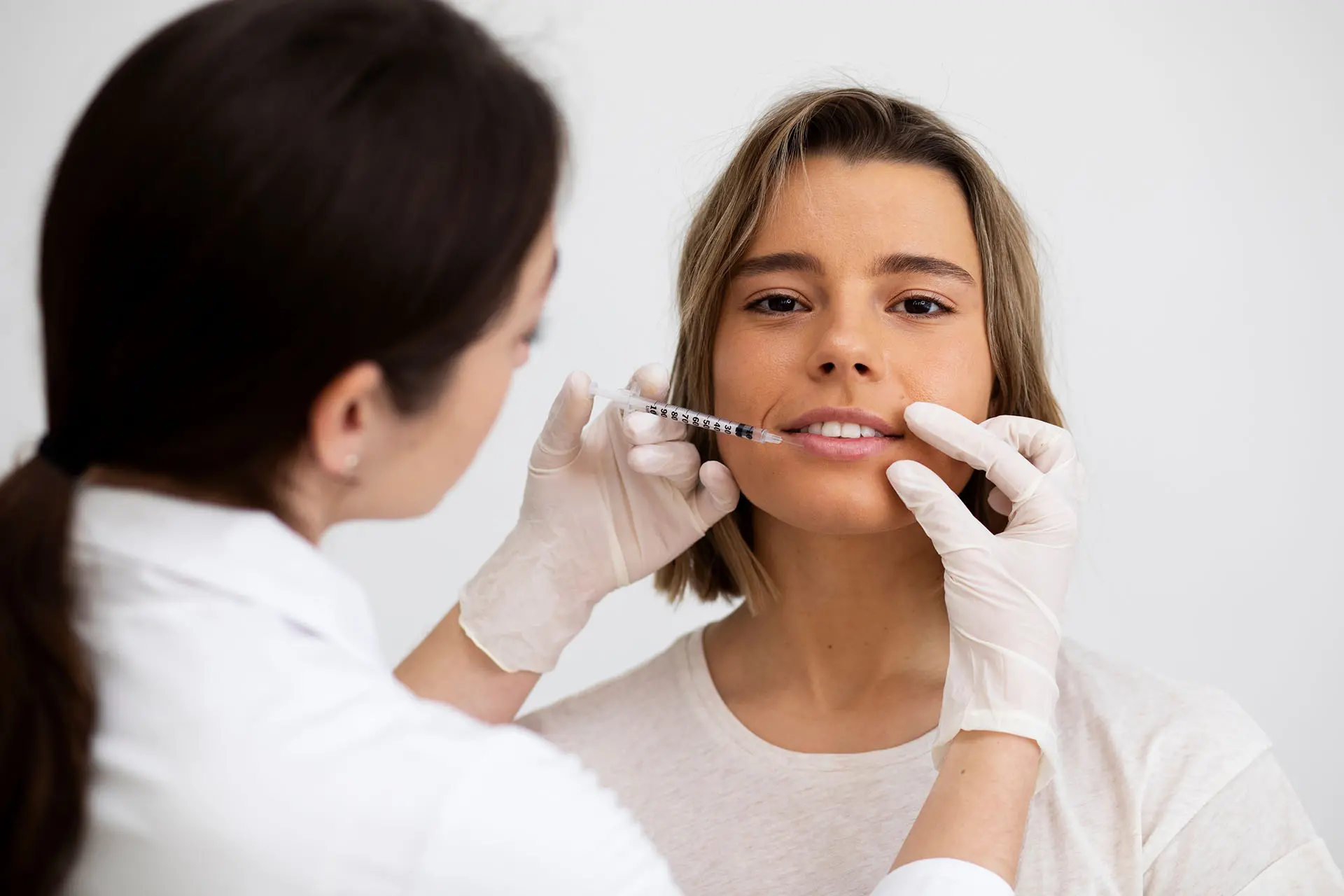
When Kylie Jenner stepped onto the 2026 BAFTAs red carpet alongside Timothée Chalamet, fans didn’t just notice her vintage Thierry Mugler gown — they noticed her lips. Gone were the famously plumped pillows that launched the #KylieJennerLipChallenge a decade ago. In their place: a softer, more proportionate mouth that sent the internet into a frenzy. “She looks so natural now,” one social media user wrote. “The best she’s ever looked,” said another.
The reaction wasn’t just celebrity gossip. It was a signal. Across Dallas, Fort Worth, Plano, and the wider Texas market, med spa phones started ringing — and they haven’t stopped since. Filler dissolution, once a niche corrective service, is now arguably the hottest treatment in cosmetic injectables. Here’s why Dallas has become ground zero for the “lip reversal” movement, and what aspiring injectors need to know to capitalize on it.
The Cultural Shift: From Overfilled to Understated
For nearly a decade, the maximalist look defined cosmetic injectables. Lips were larger, cheeks were higher, and jawlines were sharper than nature ever intended. Kylie Jenner was both the face and the engine of that era — her 2015 admission of using lip fillers single-handedly created a generational boom in the industry.
But aesthetics, like fashion, cycle. The “snatched” look that dominated Instagram is giving way to what injectors are calling the “soft refresh” — natural proportions, balanced features, and visible skin texture. Jenner’s apparent reversal is the most public example of a trend that’s been brewing for two years. UK aesthetic clinics have reported up to a 30 percent rise in patients requesting filler removal, and Dallas-area med spas are seeing similar numbers, often higher.
Why Dallas specifically? Three reasons converge. The metroplex has one of the densest concentrations of med spas in the country. Texas patients have historically been early adopters of injectables, meaning many are now ten-plus years into their filler journey and ready for a reset. And Dallas’s celebrity-adjacent social scene — from the Cowboys cheerleader culture to the Bravo-fueled “Real Housewives” market — moves on aesthetic trends faster than almost any other U.S. city.
What Filler Dissolution Actually Is
The procedure behind the trend is deceptively simple. Most modern dermal fillers are made from hyaluronic acid, a naturally occurring substance in the human body. Brands like Juvederm and Restylane use cross-linked hyaluronic acid gels to add volume to lips, cheeks, and other facial areas.
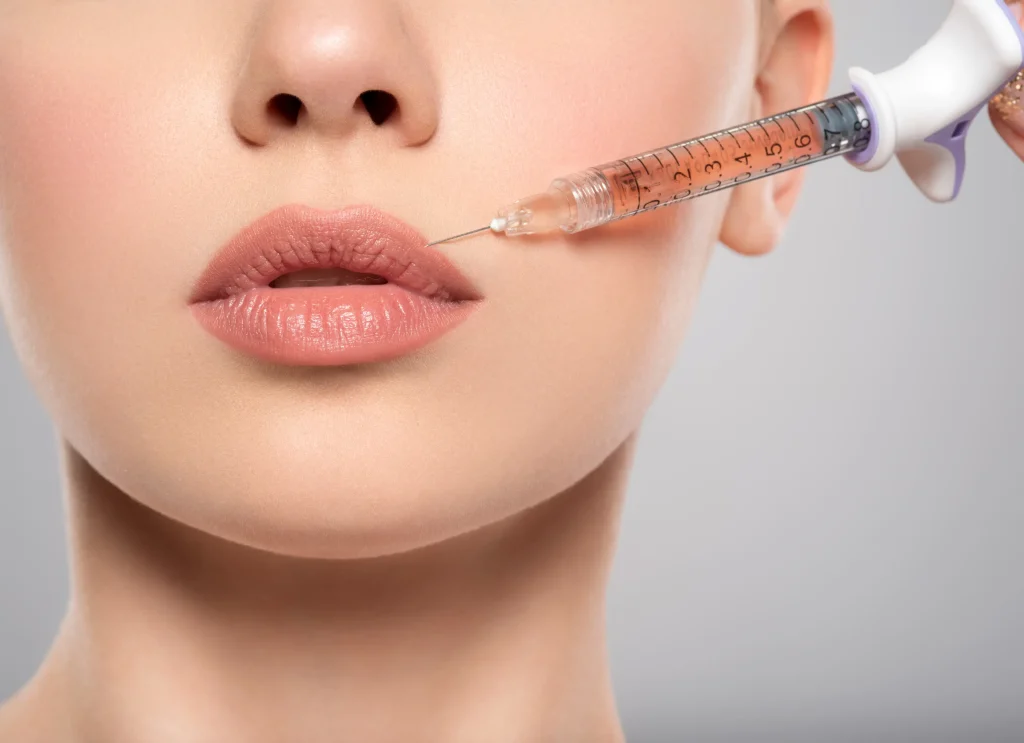
To reverse the effect, injectors use an enzyme called hyaluronidase, which breaks down the chemical bonds in hyaluronic acid molecules. Injected directly into the area where filler was placed, hyaluronidase can dissolve unwanted filler in as little as 24 to 48 hours — and in some cases, results appear within hours.
The U.S. Food and Drug Administration has approved several hyaluronidase products, including Hylenex and Vitrase, for various medical uses. While the FDA hasn’t approved hyaluronidase specifically for cosmetic filler dissolution, off-label use by licensed medical professionals is well-established and supported by peer-reviewed research published in journals indexed at the National Library of Medicine.
The procedure is fast — typically 15 to 30 minutes — and downtime is minimal. Patients can expect some swelling and possible bruising, but most return to normal activities the same day.
Why Patients Are Asking for It
The motivations behind the dissolution boom are more nuanced than “I want to look like Kylie again.” From conversations with Dallas-area providers, three patient profiles dominate:
The Migration Patient. Filler doesn’t always stay where it’s put. Over years of repeated injections, hyaluronic acid can migrate above the vermillion border, creating the “filler mustache” or “shelf” effect that’s become a giveaway sign of overdone work. These patients want a clean slate before any new treatment.
The Long-Term User. Many Dallas patients have been receiving filler for a decade or more. Even when each individual treatment looked natural, the cumulative effect has produced features that no longer look like them. Dissolution offers a “factory reset.”
The Career Pivot. Television, real estate, sales, and finance professionals are increasingly told — sometimes by management consultants, sometimes by HR — that visible cosmetic work reads as a liability. Dissolution offers plausible deniability and a return to a “Zoom-ready” look.
Ready to add this service? See our Dallas training schedule →
The Business Opportunity for Injectors
Here’s where the trend gets interesting for medical professionals: filler dissolution commands premium pricing and high demand, but requires specialized training that most injectors don’t have. Dissolving filler well is technically harder than placing it. The injector must understand anatomy, vascular structures, dosage calibration based on filler type and volume, and how to manage potential allergic reactions to the enzyme itself.
For nurses, physician assistants, and physicians looking to enter or expand within the aesthetic medicine space, this is a moment of unusual opportunity. Demand is outpacing supply across Texas, and providers who can confidently market both placement and dissolution services capture significantly more revenue per patient.
If you’re a medical professional in the DFW area, comprehensive Botox training in Dallas typically forms the foundation, with most programs covering dermal filler injection and complication management — including hyaluronidase use — as core curriculum. Surrounding markets are equally hungry: providers offering Botox training in Fort Worth, Plano, and Colleyville report that filler dissolution modules are now among the most requested electives.
Smaller markets are also experiencing the ripple effect. Argyle and Waxahachie have seen their med spa counts grow significantly as patients seek providers outside the more saturated central Dallas market. Even outside DFW, in cities like Austin and The Woodlands, injectors are reporting similar shifts in patient priorities.
💡 Want to Add Filler Dissolution to Your Practice? Our injector training programs cover everything from foundational Botox technique to advanced filler placement and hyaluronidase dissolution protocols. Explore Training Programs Near You →
The Safety Conversation Most Patients Skip
Dissolution sounds simple, but it carries real risks that every patient — and every injector — needs to understand. Allergic reactions to hyaluronidase, while rare, can be serious, ranging from localized swelling to anaphylaxis in extreme cases. Test doses are standard practice for first-time users.
More commonly, patients are surprised to learn that hyaluronidase doesn’t discriminate. It dissolves not only the injected filler but also some of the body’s natural hyaluronic acid in the treatment area. This can produce a temporarily deflated, slightly aged appearance for several weeks before the body replenishes its own hyaluronic acid stores. Reputable providers always discuss this in advance.
There’s also the question of “all or nothing.” Skilled injectors can micro-dose hyaluronidase to dissolve only a portion of existing filler, preserving some volume while correcting migration or asymmetry. This is the technique most likely behind Jenner’s apparent reversal — not a complete dissolution, but a careful reduction that maintained shape while softening size.
For injectors entering this space, the American Society of Plastic Surgeons and the Centers for Disease Control and Prevention both publish guidance relevant to injectable cosmetic procedures, infection control, and adverse event reporting that’s worth familiarizing yourself with before treating patients.
What’s Next for Dallas Med Spas
The dissolution trend isn’t a one-off cycle. It signals a broader maturation of the cosmetic injectables industry, one in which patients are more educated, more selective, and more willing to course-correct. Med spas that build “reversal and refinement” services into their core offering — not as a fringe correction service but as a respected treatment category — will outperform those still optimizing for volume.
For injectors who want to expand their skill set beyond facial aesthetics entirely, specialized training in areas like penile injections represents another fast-growing niche, though one with very different patient demographics and clinical considerations.
The most accessible entry point for many practitioners remains foundational education. An online Botox training course can provide flexible certification for medical professionals balancing existing clinical practice, while in-person programs offer the hands-on filler and dissolution practice that ultimately separates competent injectors from exceptional ones.
The Bigger Picture
Kylie Jenner didn’t invent the lip filler trend, and she won’t single-handedly end it. But her 2026 reversal — whether complete or partial, intentional or just well-photographed — has crystallized something the industry has been quietly building toward for years. Patients want results that look like themselves, just better. They want the freedom to change their minds. And they want providers skilled enough to give them both.
For Dallas med spas, that’s not a threat. It’s the biggest opportunity in a decade. The clinics that recognize filler dissolution as a flagship service — not a reluctant correction — will define the next era of aesthetic medicine in Texas. And the injectors who train for it now will be the ones with the booked-out calendars when the next celebrity walks a red carpet looking suspiciously, refreshingly natural.