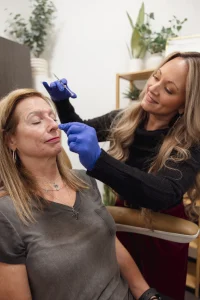
Fuller, more defined lips remain one of the most requested goals in aesthetic medicine. But adding noticeable volume isn’t always what a patient wants. Some simply want their upper lip to appear slightly more visible when they smile, while others want to enhance their lip shape, restore lost volume, or improve symmetry.
That’s where two popular treatments come into the conversation: lip flips and lip fillers.
Although both can make the lips appear fuller, they work in completely different ways. A lip flip uses a neuromodulator to temporarily relax specific muscles around the upper lip, while lip filler places a gel-like substance—commonly hyaluronic acid—into the lips to physically add volume.
So, when comparing lip flip vs lip filler, which one should you choose? Here’s what you need to know.
What Is a Lip Flip?
A lip flip is a minimally invasive injectable treatment that uses small amounts of a neuromodulator, such as Botox, around the upper lip.
Instead of adding volume, the treatment temporarily relaxes targeted muscles around the mouth. This allows a little more of the upper lip to show, creating the appearance of a slightly fuller or more prominent lip.
Because no volume is actually being added, the change is generally subtle.
A lip flip may be considered by patients who want their upper lip to appear more visible, particularly when smiling. It may also be discussed with patients whose upper lip tends to curl inward when they smile or who show more gum than they would prefer.
What Is Lip Filler?
Lip filler works very differently.
Rather than changing muscle activity, dermal filler is injected directly into the lips to increase volume or improve their shape. Many temporary lip fillers use hyaluronic acid (HA), a substance naturally present in the body.
Depending on the patient’s anatomy and goals, filler may be used to enhance fullness, improve definition, address certain asymmetries, or restore volume that has decreased over time.
The FDA has approved specific dermal filler products for lip augmentation in adults aged 22 and older. Importantly, FDA approval applies to specific products and indications, so patients should discuss the exact product being used with a qualified healthcare provider.
Lip Flip vs Lip Filler: What’s the Main Difference?
The easiest way to understand the difference is this:
A lip flip changes how the upper lip sits or moves. Lip filler adds actual volume to the lips.
Here’s a quick comparison:
| Lip Flip | Lip Filler | |
| Treatment type | Neuromodulator injection | Dermal filler injection |
| Adds physical volume? | No | Yes |
| Primary goal | Subtle upper-lip enhancement | Volume, shape and definition |
| Results | More upper lip may become visible | Lips physically become fuller |
| Typical longevity | About 2–5 months | Often longer; varies by product and patient |
| Best for | Subtle enhancement | More noticeable or customizable volume |
| Downtime | Generally minimal | Swelling and bruising can occur |
Lip flip effects typically last around two to five months. Lip filler longevity varies according to the filler used and individual factors; lip fillers may commonly last around 12 to 18 months, while the FDA emphasizes that duration depends on the specific filler material and treatment area.
What Does a Lip Flip Look Like?
One of the biggest misconceptions about a lip flip is that it creates the same result as filler.
It doesn’t.
A lip flip doesn’t physically make the lip larger. Instead, relaxing targeted muscles can allow more of the upper lip to remain visible, giving it a slightly fuller or “poutier” appearance.
This can make it appealing to someone who wants a subtle enhancement without adding filler volume.
However, because the treatment changes muscle activity around the mouth, technique and dosing matter. Too much relaxation can temporarily interfere with normal lip function.
That’s one reason an individual assessment is important before treatment.
What Can Lip Filler Do?
Lip filler offers more flexibility when actual volume or structural enhancement is the goal.
Depending on the patient’s natural anatomy and desired outcome, a trained provider may use filler to enhance the upper lip, lower lip, or both. Treatment can also focus on shape, definition, proportion, or certain asymmetries rather than simply making the lips as large as possible.
The final appearance depends on several factors, including the patient’s underlying lip structure and the type and amount of filler used.
Good lip filler treatment should therefore begin with a conversation about the patient’s desired result—not simply a predetermined amount of product.
Which Looks More Natural: Lip Flip or Lip Filler?
Both can look natural when appropriately selected and performed.
A lip flip often produces a particularly subtle change because it doesn’t add volume. For someone who already likes the size of their lips but wants slightly more upper-lip show, that may be enough.
Lip filler can also create subtle results. The amount and type of filler, injection technique, existing anatomy, and treatment plan all influence the final appearance.
The important question isn’t necessarily which treatment looks more natural.
It’s which treatment matches your anatomy and goals.
Lip Flip vs Lip Filler for Thin Lips
If you naturally have thin lips and want them to be physically fuller, filler may offer capabilities that a lip flip cannot because filler actually adds volume.
However, thin lips don’t automatically mean filler is the best choice.
For example, someone may have an upper lip that appears relatively thin specifically because it curls inward when smiling. In that situation, a provider might discuss whether a lip flip could create the desired improvement without adding volume.
This is why an in-person facial assessment can be more useful than choosing a treatment based solely on before-and-after photos.
Lip Flip vs Lip Filler for a Gummy Smile
A lip flip may also be considered for certain patients concerned about excessive gum show when smiling.
By carefully relaxing specific muscles involved in elevating or curling the upper lip, a neuromodulator treatment may alter how much gum is visible during a smile. People whose upper lip turns inward or pulls upward significantly when smiling may be candidates for a lip flip.
Not every gummy smile has the same cause, however, so proper assessment remains important.
How Long Do the Results Last?
Neither treatment should be considered permanent.
For a lip flip, the effects gradually fade as the neuromodulator wears off. A typical range of approximately two to five months.
Dermal fillers are also generally temporary. The FDA notes that the body eventually absorbs most approved fillers, and longevity varies based on the material and treatment location.
That difference in duration can be an important consideration when comparing the two options.
Is There Downtime?
Both procedures are nonsurgical, but that doesn’t mean they’re completely free of potential side effects.
Following a lip flip, patients may experience mild swelling or sensitivity around the injection area. Because the treatment affects muscles surrounding the mouth, providers should also discuss possible functional effects and aftercare instructions.
Lip filler more commonly produces temporary swelling, tenderness, redness, or bruising. These reactions often occur shortly after injection and typically improve with time.
Dermal filler also carries uncommon but potentially serious risks, including accidental injection into a blood vessel, which can result in tissue damage and, rarely, vision problems or stroke. The FDA recommends receiving filler from a licensed healthcare provider experienced in facial anatomy, injection techniques, and complication management.
Can You Get a Lip Flip and Lip Filler Together?
For some patients, the decision doesn’t necessarily have to be lip flip OR lip filler.
Because the treatments accomplish different things, a qualified provider may determine that a patient’s goals could involve both approaches. Some patients may benefit from either option or potentially both, depending on their goals.
For example, filler might be considered when actual volume is desired, while a lip flip could address how the upper lip moves.
That doesn’t mean combining treatments is appropriate for everyone. The FDA notes that the safe use of dermal fillers in combination with Botox and other treatments has not been evaluated in controlled clinical studies.
Lip Flip or Lip Filler: Which Is Right for You?
Your aesthetic goal is the best place to start.
A lip flip may be worth discussing if you:
- Want a very subtle change
- Want more of your upper lip to show
- Don’t necessarily want additional lip volume
- Notice your upper lip curls inward when smiling
- Want to discuss excessive gum show
Lip filler may be worth discussing if you:
- Want to physically add volume
- Want fuller upper or lower lips
- Want more noticeable lip enhancement
- Want to improve shape or definition
- Want to address certain asymmetries or lost volume
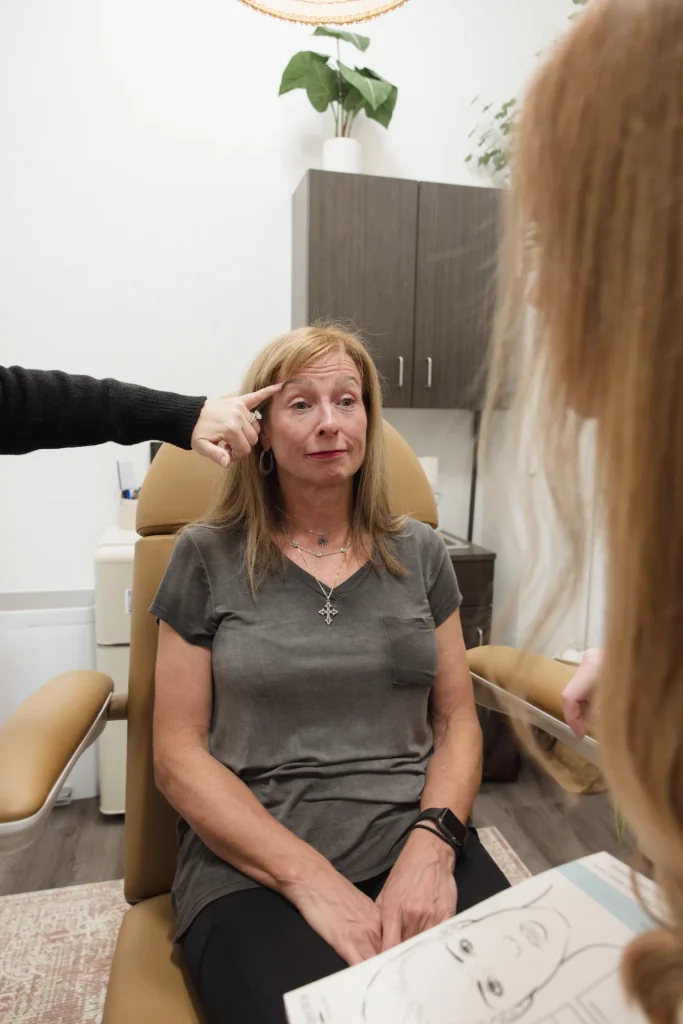
You don’t need to decide on your own. A consultation allows an experienced injector to assess your lip anatomy, facial proportions, movement, and desired outcome before recommending a treatment plan.
Lip Flip vs Lip Filler: The Bottom Line
When comparing lip flip vs lip filler, remember that the treatments aren’t interchangeable.
A lip flip changes muscle activity to reveal slightly more of the upper lip without adding volume, while lip filler adds physical volume and can be used to modify fullness, shape, and definition.
Neither option is automatically better. The right choice depends on your anatomy, how your lips move, the amount of enhancement you want, and your overall aesthetic goals.
If you’re unsure which approach fits the look you’re trying to achieve, schedule a consultation with a qualified aesthetic provider. A personalized assessment can help determine whether a lip flip, lip filler, or another approach is most appropriate for you.
Related training: advanced injectable and penile injection training from Injector Training Academy.