If you are a beginner injector thinking about a future in aesthetics, it helps to pause and understand what the field actually involves before jumping into training. Medical aesthetics looks exciting from the outside, but there is more responsibility behind each treatment than many people expect.
A common early question is straightforward. What is medical aesthetics, and how does someone really become an aesthetic injector?
This guide is written for medical professionals who want a clearer picture of the field. Whether you are a registered nurse, nurse practitioner, or another licensed provider, the goal here is to explain how aesthetic medicine works in real practice, not just in theory.
What Is Medical Aesthetics?
Medical aesthetics is a clinical area of healthcare that focuses on non-surgical cosmetic treatments performed by trained medical professionals. When people ask what aesthetic medicine is, they are usually referring to the medical use of injectables and skin treatments to improve facial appearance while keeping patient safety as the priority.
This is very different from non-medical cosmetic services. Medical aesthetics involves prescription products, patient assessment, and clinical decision-making. Each treatment requires an understanding of anatomy, risk, and long-term outcomes.
A skilled aesthetic injector does more than place products. They study facial structure, how the face moves, where volume is lost, and how symmetry can be improved without making changes look obvious.
Who Can Become an Aesthetic Injector?
Medical aesthetics is limited to licensed medical professionals. Most people who enter the field are the following:
Because injectables involve needles, medication, and vascular structures, injectors must follow medical guidelines. In many states, a medical director is also required.
For anyone who wants to become an aesthetic injector, proper education and supervision are not optional. They are part of practicing safely and protecting both patients and professional licenses.
Understanding Facial Aesthetics and Facial Anatomy
Facial anatomy is one of the most important parts of injector training. Beginner injectors spend a significant amount of time learning how the face is structured and how it changes over time.
This includes understanding facial muscles, fat pads, blood vessels, and areas that carry a higher risk. Different areas of the face behave differently. The jawline, tear trough, nasolabial folds, and crow’s feet each require a different approach.
A strong understanding of facial anatomy helps injectors enhance facial features safely. Without this foundation, even advanced injectable products can lead to complications or unnatural results.
Common Injectables Used in Medical Aesthetics
Botox and Neuromodulators
Botox and other neuromodulators are used to relax specific facial muscles. These treatments help soften dynamic wrinkles while preserving natural expression. Precise dosing and placement matter more than many beginners realize.
Dermal Fillers and Hyaluronic Acid Fillers
Dermal fillers, especially hyaluronic acid fillers, are used to restore volume, support facial contours, and improve balance. An acid filler must be placed at the correct depth and in the correct location to reduce the risk of bruising, migration, or vascular issues.
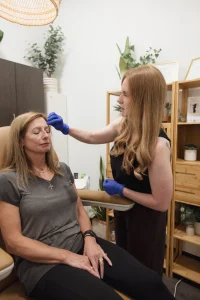
Injectors may choose between needles or a cannula depending on the treatment area and patient anatomy.
Injection Technique and Patient Safety
Injection is a skill that develops with time. Beginner injectors focus on learning control, accuracy, and consistency rather than speed.
This includes:
- Understanding injection depth and pressure rather than relying on force
- Recognising how technique changes from one area of the face to another
- Assessing each patient individually instead of following a fixed pattern
- Reviewing medical history before every treatment
- Performing a thorough patient assessment prior to injection
- Documenting treatments clearly and accurately for patient safety
Why Hands-On Injector Training Matters
Hands-on injector training is where theory becomes real. Watching videos or reading alone does not prepare injectors for real patients.
A strong injector training program includes supervised injections, live models, and feedback from experienced practitioners. This is how beginner injectors learn to apply anatomical knowledge in real situations.
Hands-on experience also helps reduce hesitation and uncertainty, which are very common early in an injector’s career.
Building Confidence as a Beginner Injector
Confidence does not appear overnight. It develops gradually through repetition, supervision, and learning from mistakes.
Beginner injectors build confidence by practicing under guidance, asking questions, and continuing their education. A solid understanding of facial anatomy and aesthetics plays a major role in feeling prepared.
A structured beginner’s approach to medical aesthetics helps injectors grow at a steady and safe pace.
Choosing the Right Aesthetic Training Program
Not all aesthetic training programs are the same. Beginner injectors should look for courses that focus on patient safety, anatomy, and real injection experience.
Botox and filler training should involve hands-on practice, not just demonstrations. Ongoing support and mentorship after training can also make a significant difference.
The right training program sets realistic expectations and prepares injectors for real-world practice.
Career Paths in Medical Aesthetics
Aesthetic injectors work in many settings, including medical spas, dermatology practices, plastic surgery offices, and wellness clinics.
Some injectors later move into advanced training, leadership roles, or independent practice. Medical aesthetics offers flexibility, but it also requires a commitment to continued learning.
Start Your Aesthetic Injector Career with TAMA
If you are ready to start your career in medical aesthetics, Texas Academy of Medical Aesthetics (TAMA) offers hands-on injector training for beginner injectors and licensed medical professionals. TAMA emphasizes facial anatomy, safe injection technique, patient assessment, and real world aesthetic practice.
Through structured training sessions and mentorship, TAMA helps aspiring injectors build confidence and enter the field of aesthetic medicine safely and professionally.
Contact us to learn how to get started.
Frequently Asked Questions
How long does it usually take to feel comfortable injecting?
Most injectors say comfort develops after months of supervised practice rather than weeks.
Can beginner injectors treat patients on their own?
This depends on state laws and supervision requirements. Many beginners work under oversight at first.
What is the hardest part of learning injectables?
For many, it is applying anatomy knowledge during real-time injection.
Do injectors need ongoing education?
Yes. Continued training is a normal part of aesthetic practice.
Can injectors specialize later on?
Yes. Many focus on specific areas of the face after gaining experience.