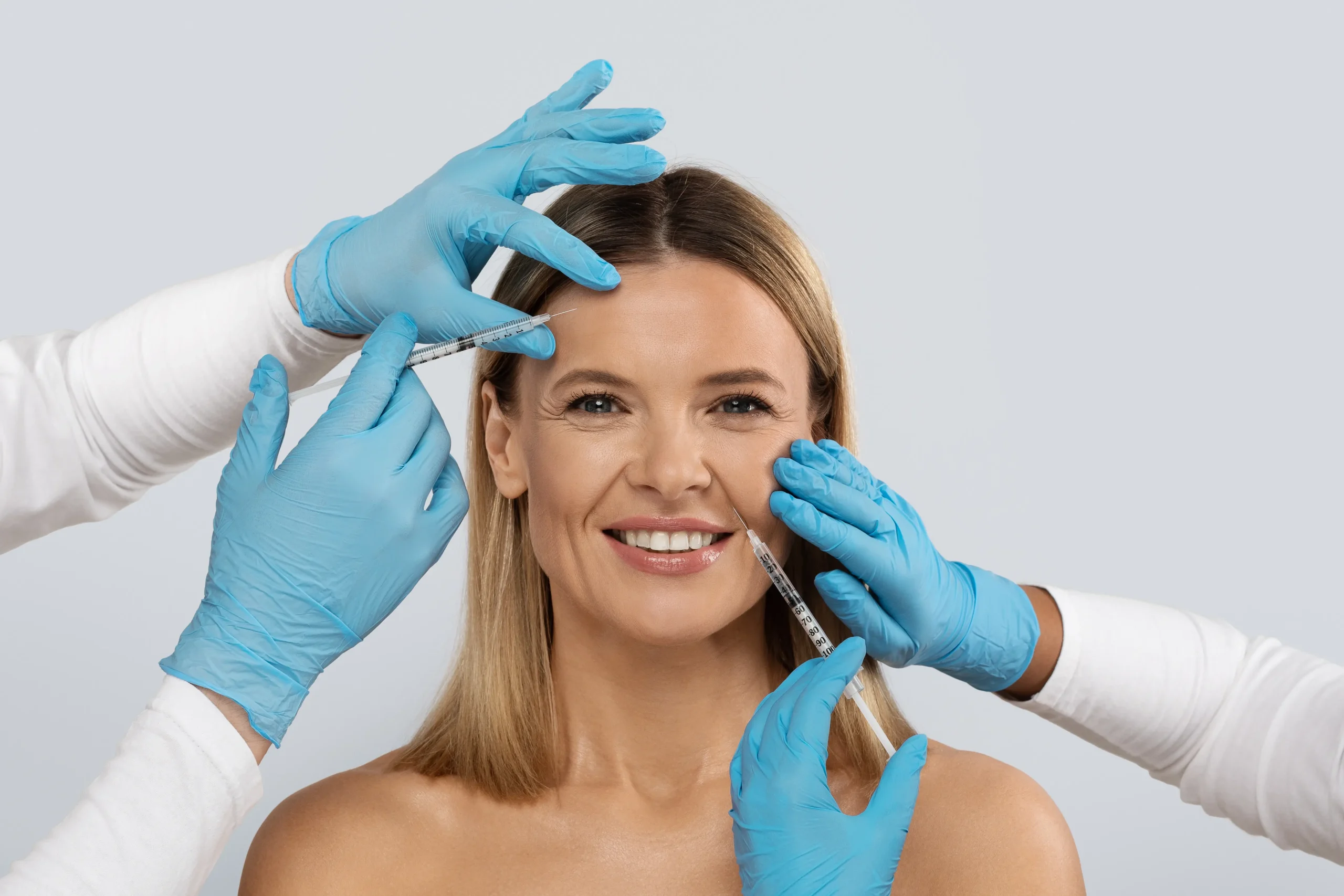
When Vanderpump Rules and Love Island USA host Ariana Madix decided to address plastic surgery speculation head-on in July 2024, she did something most celebrities still avoid :- she gave a detailed list. In an Instagram comment that has since been quoted across major outlets, Madix wrote that she has had “Botox in my glabellar lines, outer brow and my neck,” along with minimal lip filler and a small amount of filler in her chin. She also confirmed a 2019 My Ellevate procedure on her neck.
What stands out is not the procedures themselves — those are routine in modern aesthetics:- but the specific combination of areas she named: glabella, outer brow, and neck. Each of those zones carries distinct anatomical risks, and the difference between an excellent result and a serious complication often comes down to the injector’s training. For anyone considering a career in aesthetic injection, Madix’s transparency offers a useful clinical roadmap of where proper education matters most.
Why the Neck Is One of the Most Demanding Botox Zones
Neck Botox :- often called the “Nefertiti lift” or platysmal band treatment — relaxes vertical bands of the platysma muscle to reduce visible cording and soften the jawline. It looks simple in marketing photos. It is not.
The platysma sits superficially in the neck, but immediately around it run critical structures: the sternocleidomastoid muscle, the deeper strap muscles involved in swallowing, and branches of the cervical plexus. Inject too deep, or migrate the dose medially, and the patient can experience dysphagia (difficulty swallowing), neck weakness, or asymmetric smile. These complications are documented in the FDA’s safety communications on botulinum toxin products, and they’re exactly why neck injections require advanced, supervised training rather than a weekend certification.
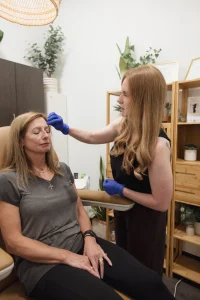
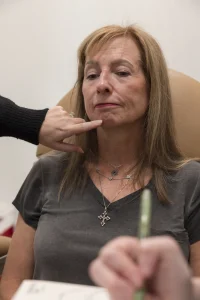
A well trained injector palpates the platysmal bands while the patient activates them, marks dose points along the band itself, and stays superficial. Programs that include neck-specific instruction — like our advanced courses in Dallas and Fort Worth — teach this through hands-on practice with real patients under direct supervision.
The Forehead and Glabella: Where Most Complications Begin
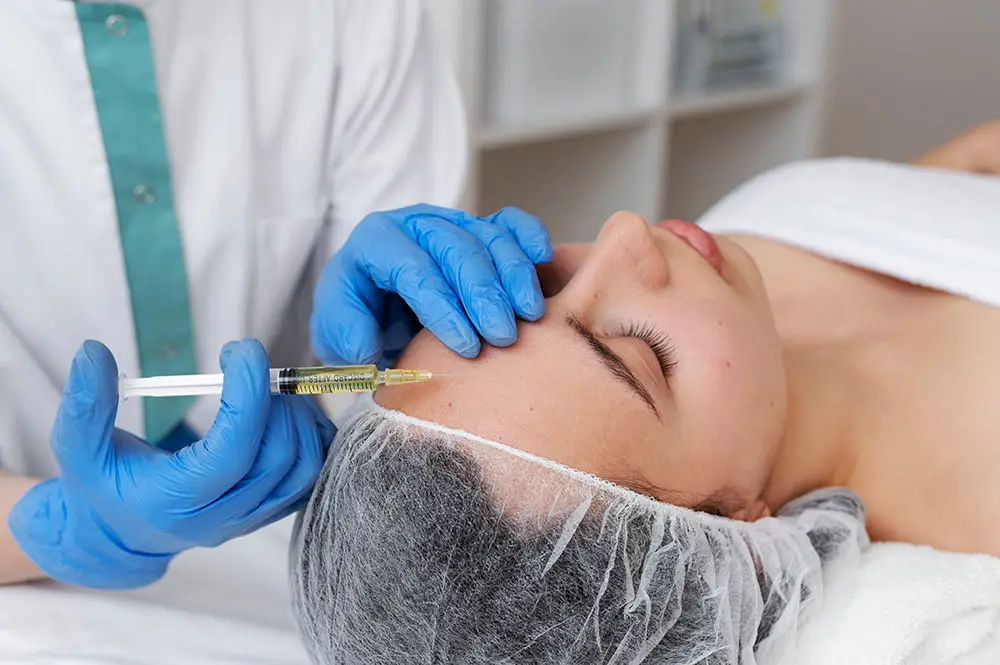
Madix specifically mentioned her “11s” :- the vertical glabellar lines between the brows — and her outer brow area. These are two of the most common treatment zones, but they’re also where the majority of cosmetic complications occur.
The frontalis is the only elevator of the brow. Over treat it, and the brow drops. Under-treat the lateral fibers while fully treating the medial frontalis, and you create the dreaded “Spock brow” — a peaked, surprised arch that patients hate. Treat too close to the orbital rim, and the toxin can diffuse to the levator palpebrae superioris, causing eyelid ptosis that can last weeks.
The glabellar complex — corrugator supercilii, procerus, and depressor supercilii — sits deep, and the injector needs to know how to layer the dose correctly to soften the frown without affecting brow position. Anatomy matters here in a way that no online course can fully convey. This is why our programs in Austin and Plano emphasize cadaver and live-model anatomy review before students touch a syringe.
What Madix’s Outcome Tells Us About Good Practice
The aesthetician who originally prompted Madix’s response wrote that her injectables looked “nearly invisible” — preserving and enhancing rather than aging or distorting. That outcome reflects three things any trained injector should be doing:
Conservative dosing. Madix gets Botox roughly every six months, suggesting standard maintenance dosing rather than aggressive top-ups. The American Society of Plastic Surgeons consistently reports that overuse, not standard use, drives most patient dissatisfaction.
Whole face thinking. She did not just chase wrinkles. The combination of glabella, outer brow, and neck addresses the upper third and the jawline together — a balanced approach that avoids the common mistake of over-treating one area while neglecting how it relates to the rest of the face. This is a core teaching point in our Argyle and Colleyville curricula.
Knowing what not to do. Madix has been clear about what she has not had — no blepharoplasty, no jawline liposuction, no extensive filler. A trained injector who turns away inappropriate requests protects the patient and the practice long-term.
State Regulation and the Reality of Scope of Practice
In Texas, Botox and dermal fillers are prescription medical devices, and their administration is regulated by the Texas Medical Board and, for nurses, the Texas Board of Nursing. Delegation, supervision, and protocol requirements vary based on the injector’s license. Understanding these rules is not optional — it’s a core part of practicing legally and ethically. Our courses incorporate state-specific compliance training so graduates know exactly what their license permits.
Building Toward Advanced Procedures
Most injectors should not start with neck Botox. The standard career path moves from glabella and crow’s feet to forehead, then to brow shaping, and finally — after months or years of consistent practice — to advanced areas like the platysma, masseter, and lower face. Our programs in Waxahachie and The Woodlands are structured around exactly this progression, so students build competency safely rather than skipping ahead.
Final Thoughts
Ariana Madix did the aesthetics industry a favor by being specific. Her list of treated areas is essentially a syllabus of the zones every serious injector eventually needs to master — and the zones where poor training shows up fastest in bad outcomes. The forehead, the glabella, and especially the neck reward injectors who have invested in real anatomical education and punish those who haven’t.
If you’re serious about practicing in this space, start with structured, supervised education. Browse our full lineup of hands-on programs and trainings to find the level and location that match where you are in your career.
FAQs
Q1: Has Hilary Duff confirmed using Botox?
Yes. In a 2022 interview with Women’s Health, Hilary Duff openly acknowledged using as part of her routine, mentioning it alongside facials, hair treatments, and brow work. She has not, however, confirmed lip fillers or other surgical procedures.
Q2: What makes Hilary Duff’s results look so natural?
Her outcome reflects three principles: conservative dosing, strategic placement that preserves facial expression, and whole-face balance rather than aggressive treatment of a single zone. Plastic surgeons analyzing her appearance consistently note subtle midface filler and light Botox in the upper face — never overdone.
Q3: How much training do I need to inject Botox safely?
Requirements vary by state and license type. In Texas, Botox administration is regulated by the Texas Medical Board and Texas Board of Nursing. Beyond legal compliance, hands-on supervised training with live patients is essential before practicing independently. Online-only certifications are not sufficient preparation.
Q4: Can I learn to deliver natural-looking results in a short course?
Foundational injection skills can be taught in a focused program, but mastering subtle, natural results takes ongoing practice and continued education. Our hands-on training programs across Texas locations build this skill progressively, starting with low-risk areas before advancing to complex zones.
Q5: What’s the most common mistake new injectors make?
Over-correction. New injectors often use too much product or place it too aggressively, creating frozen foreheads, peaked brows, or overfilled cheeks. Training emphasizes under-correcting initially — you can always add more, but you can’t remove once injected.