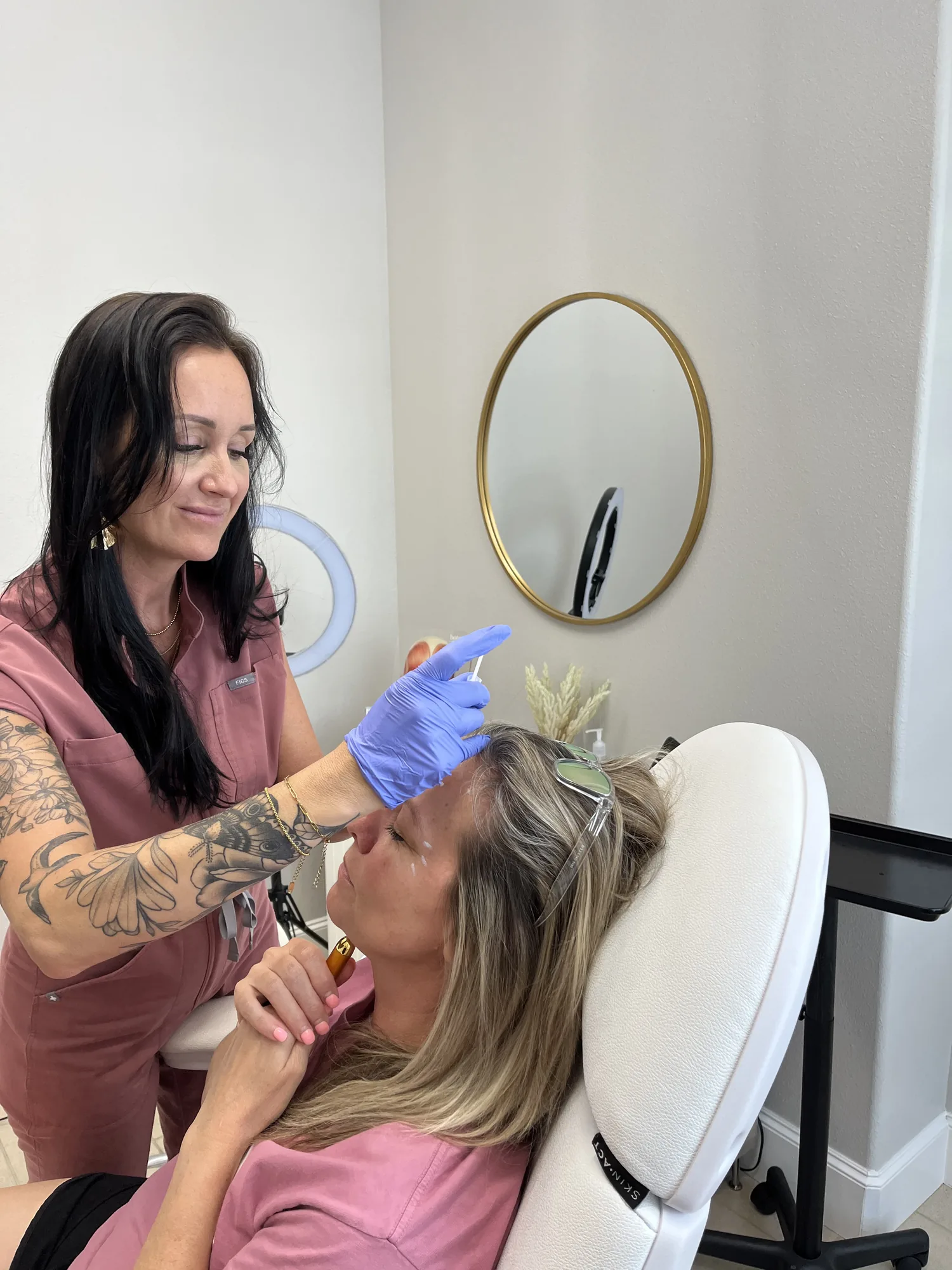
If you’re a nurse looking to break into aesthetics, you’ll see three types of programs advertised: shadowing, internships and training courses. They sound similar, but they teach very different things, and they cost very different amounts. Choosing the wrong one can leave you with a certificate but no real injecting experience, or with hours of observation but no hands-on skills.
This guide explains what each option includes, how they compare, and how to decide which fits you.
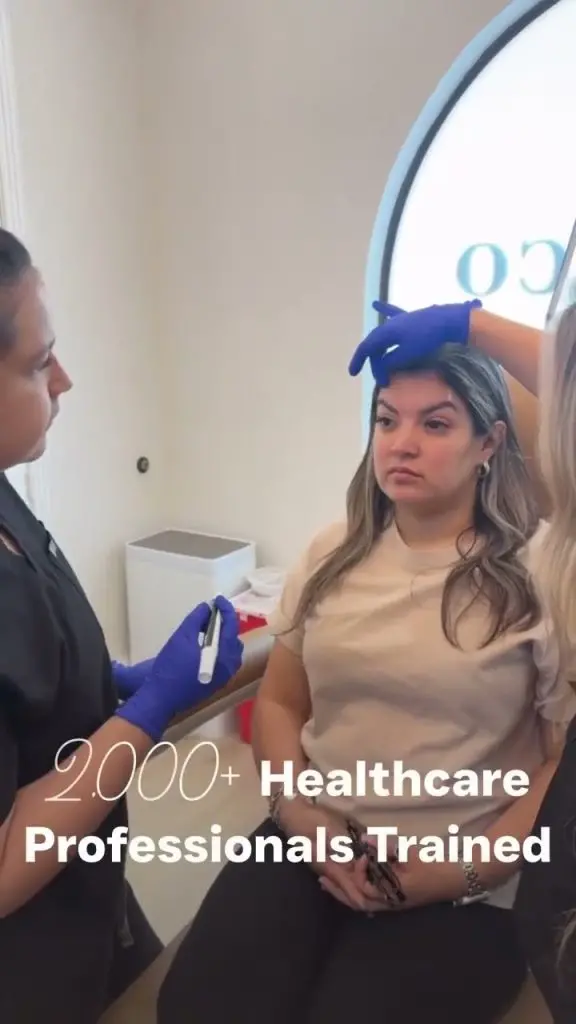
What Is Nurse Injector Shadowing?
Shadowing means observing an experienced injector at work. You watch consultations, treatments and follow-ups, and you can ask questions between patients.
What you learn:
- How a real med spa day runs
- How injectors consult, plan treatments and set expectations
- How they handle documentation, photos and aftercare
What you don’t get: Shadowing is observation only. In most programs, you don’t inject patients yourself, so shadowing alone won’t qualify you to treat anyone.
Typical format and cost: Texas med spa shadowing programs we reviewed in 2026 offered 2- to 8-hour shadow days, priced from about $160 per hour up to $1,000 per day, with at least one “premier” package at $2,999.
EDITOR NOTE: Add source names and the date each price was checked (e.g., “[Clinic], program page, checked Oct 2026”). Prices change, so re-check before publishing.
Best for: nurses who want to see the job before committing, or trained injectors who want extra exposure.
What Is an Injector Training Course?
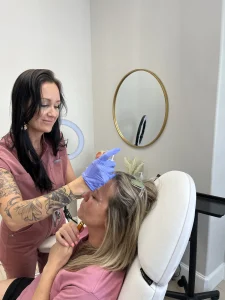
A training course teaches you how to inject. Good courses combine theory with supervised, hands-on practice.
What you learn:
- Facial anatomy and facial muscles, including danger zones
- Product knowledge for botulinum toxin and dermal fillers
- Patient assessment, consent and contraindications
- Injection technique, safety and complication management
What to check: Not all courses include live models. Some use mannequins or have several students share one patient. Ask how many live models you will personally inject and whether training is one-on-one or group.
Best for: nurses who are ready to learn the core skills and start injecting under supervision.
What Is a Nurse Injector Internship?
An internship combines training, supervised injecting and clinic exposure over a longer period. It’s the most complete of the three options.
What you learn:
- Everything a training course covers, often with more live models
- Real clinic workflows through shadowing
- Ongoing feedback from mentors as your skills develop
- Career skills such as resumes, interviewing and marketing
Typical format: Internships vary widely. One Houston-area program we reviewed runs 6 to 9 weeks and about 50 hours. Others are longer.
Best for: nurses starting from zero who want enough experience to feel confident applying for their first injector role.
Side-by-Side Comparison
| Shadowing | Training Course | Internship | |
| What it is | Observation | Structured skills training | Training + clinic exposure + mentorship |
| Hands-on injecting | Usually none | Yes, if live models included | Yes, usually more models |
| Typical length | Hours to a few days | Online study + 1 hands-on day | Weeks to months |
| Career support | Rarely | Sometimes | Often |
| Qualifies you to inject? | No | Prepares you, under supervision | Prepares you, under supervision |
How ITA’s Options Compare
At Injector Training Academy, both programs are taught one-on-one and are open to professionals with an active RN, NP, PA or MD license.
| Injector Certification Program | Aesthetic Injector Internship | |
| Format | Online course + one-on-one hands-on day | 12 weeks, 80+ hours one-on-one |
| Live models | 3 neurotoxin + 3 filler | 6 neurotoxin + 6 filler |
| Shadowing | — | Unlimited, at all 9 locations |
| Mentorship | — | Lifelong |
| Career help | — | Resume, job, marketing and social media help |
| Tuition | $3,000 | $9,000 |
Our internship’s biggest difference is unlimited shadowing at all nine Texas locations. Instead of paying by the hour to watch, you can shadow as often as your schedule allows, on top of your own supervised injecting. The internship doesn’t guarantee a job, but it gives you more experience to show employers.
EDITOR NOTE: Confirm current tuition and inclusions before publishing.
Which One Fits You?
Ask yourself three questions:
- Have you injected before? If not, you need a training course or internship. Shadowing alone won’t teach you to inject.
- How much clinic exposure do you want? If you want to understand real workflows before your first job, choose an internship.
- What’s your budget and timeline? A certification course is faster and costs less. An internship takes longer but includes much more.
A common path: Some nurses start with a short online course to confirm their interest, move to a hands-on certification, and later add shadowing or an internship. Others go straight into an internship because they want the most complete start.
Costs Beyond Tuition
Whatever you choose, budget for more than the program price:
- Time off work for hands-on days or shadowing shifts
- Travel and parking, especially if the program is far from home
- Products and supplies, if they aren’t included
- Malpractice coverage once you start treating patients
- Medical director arrangements if you plan to practice independently
A program that looks cheaper may cost more once you add products, extra model days or paid shadowing hours. Compare what each option includes, not just the headline price.
Red Flags to Watch For
- “Certification” with no live models
- Group sessions where several students share one patient
- Shadowing sold as if it qualifies you to inject
- Promises of guaranteed jobs or income
- No clear answer on who supervises hands-on training
Questions to Ask Any Program
- How many live models will I personally inject?
- Is hands-on training one-on-one or in a group?
- Are products and supplies included?
- Can I shadow, and is it limited by hours or locations?
- What support do I get after I finish?
- What does the certificate mean, and what doesn’t it mean?
A Note on Scope of Practice
No program changes your license. In Texas, registered nurses inject under physician delegation, with a supervising physician and standing orders. Licensing questions go to the Texas Board of Nursing, and delegation rules are set by the Texas Medical Board. Our partner Medical Director Co. can also help with medical director placement.
Where to Train in Texas
Start with our self-paced online Botox training course, then choose a location for your hands-on training or internship shadowing: Dallas, Fort Worth, Plano, Colleyville, Argyle, Waxahachie, Austin or The Woodlands. Compare full details on our Botox and dermal filler training for registered nurses page. Once you’ve mastered the basics, specialty courses such as our penile injections training course can extend your skills.
Frequently Asked Questions
Can I become a nurse injector just by shadowing?
No. Shadowing is observation only. To inject patients, you need hands-on training with supervised practice, plus physician delegation where you work.
Is a nurse injector internship worth it?
For nurses with no aesthetics experience, an internship offers the most hands-on practice, clinic exposure and career support. It costs more and takes longer than a certification course.
How much does nurse injector shadowing cost?
Programs we reviewed in Texas ranged from about $160 per hour to $1,000 per day, with some premium packages around $3,000. ITA’s internship includes unlimited shadowing at all nine locations.
Your Next Step
Decide what you need most right now: observation, core skills or a complete start. Then choose the program that gives you the most real, supervised injecting for your goals.
Written by Kiara DeWitt, BSN, RN, CPN, Founder, President and Faculty Instructor at Injector Training Academy.
Disclaimer
Medical Disclaimer: The content on this page is for general educational and informational purposes only. It is intended for licensed healthcare professionals and is not medical, legal or financial advice. It is not a substitute for professional clinical judgment, and it is not meant for patients to use when making treatment decisions. Aesthetic procedures, including neurotoxin, dermal filler, PRP and PDO thread treatments, carry risks and must be performed only by appropriately licensed professionals within their scope of practice and under the medical supervision required in their state. Scope of practice, delegation and supervision rules vary by state and change over time, so confirm current requirements with your state licensing board, such as the Texas Board of Nursing or Texas Medical Board. Completing a training course or receiving a Certificate of Completion does not grant a license or expand your legal scope of practice, and it does not guarantee employment, income or specific clinical results. Links to outside websites are provided for reference only and do not imply endorsement. Information is accurate to the best of our knowledge at the time of publishing.