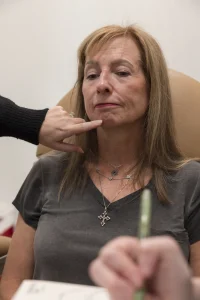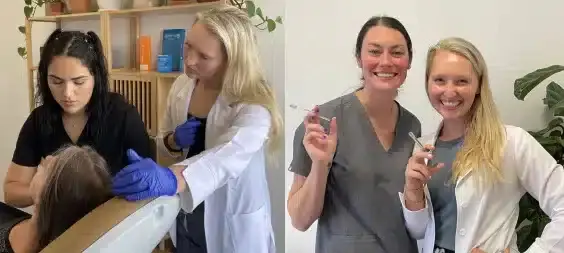
Ask ten aesthetic training programs how many live models you’ll inject and you’ll get ten different answers — two, four, six, “unlimited.” The number sits at the top of most course pages because it’s the easiest thing to advertise. It’s also the easiest thing to inflate.
The honest answer is that model count alone tells you almost nothing. What determines whether you leave a course ready to treat paying patients is the combination of models, supervised time per model, and how many people are competing for the instructor’s attention. This guide breaks down what those numbers actually mean, compares typical formats, and gives you a short checklist for auditing any hands on botox training course before you hand over a deposit.
Model count is a denominator problem
Consider two courses that both advertise “six live models.”
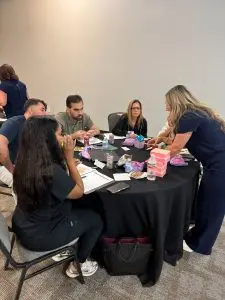
In the first, six models are shared across a class of twenty-four attendees. You watch the instructor treat two of them, take a turn on one, and go home having placed maybe eight units of product yourself.
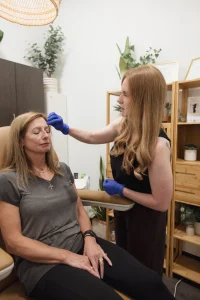
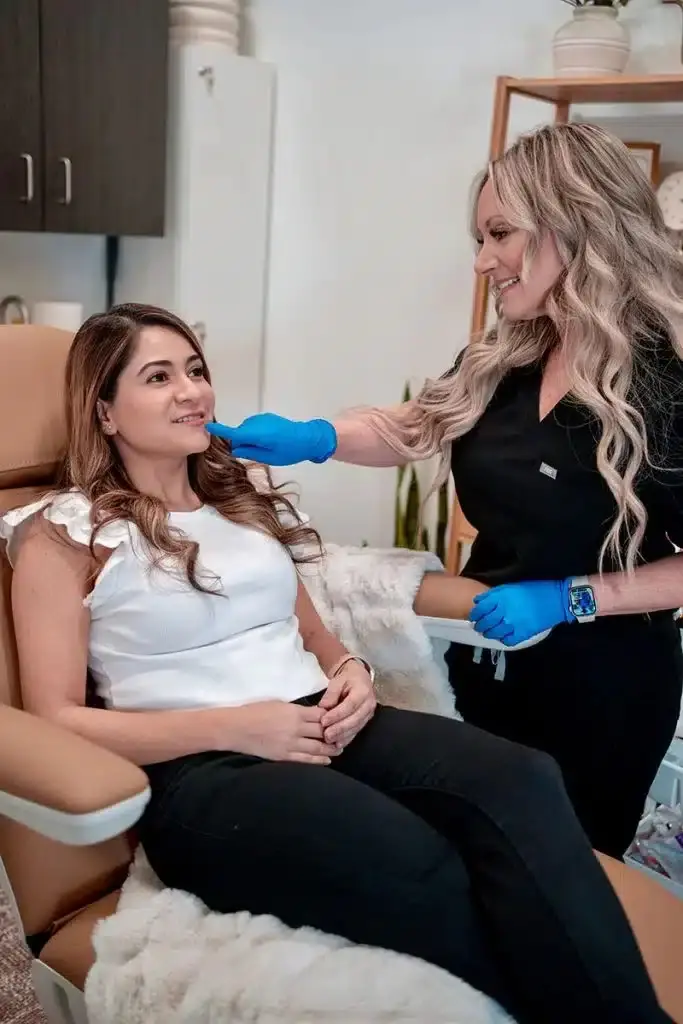
In the second, six models are split across a class of eight, with two instructors on the floor. You inject three of them from consent through post-care, and you do it with someone standing at your shoulder correcting your depth and angle in real time.
Same advertised number. Radically different training. This is why the metric worth chasing isn’t models — it’s supervised injections performed by you personally, and the ratio of attendees to instructors that makes those injections possible. A program that won’t tell you its attendee-to-instructor ratio is telling you something.
What skill acquisition research suggests about repetition
Injecting neuromodulators is a psychomotor skill, and psychomotor skills follow a predictable learning curve. The literature on deliberate practice is consistent on one point: repetition without immediate corrective feedback produces confident practitioners, not competent ones. Volume matters, but only when it’s coupled to correction.
That has a practical implication for course shopping. Ten rushed injections with no feedback are worth less than four slow ones where an instructor stops you mid-approach and explains why your needle is sitting too superficially for the corrugator. Botulinum toxin works by blocking acetylcholine release at the neuromuscular junction — a mechanism described in detail in the botulinum toxin literature — which means placement error doesn’t just underperform, it migrates. Brow ptosis and eyelid droop are placement problems, and placement is learned under supervision.
You also need enough anatomical variation across your models to see real faces rather than one textbook face. Three patients with different facial muscle bulk, asymmetry, and prior treatment history teach you more than six near-identical ones.
Hands-on hours compared across common formats
Here’s how the market generally breaks down. Treat these as ranges, not guarantees — ask every provider to confirm in writing.
| Format | Typical live models | Attendees per instructor | Your supervised injection time | Best suited to |
|---|---|---|---|---|
| Online-only theory | 0 | n/a | 0 hours | Didactic foundation, pharmacology, documentation |
| One-day “certification” | 1–2 shared | 15–25 | 15–45 minutes | Exposure only; rarely enough to practice |
| Two-day small cohort | 3–6 | 4–8 | 3–6 hours | Nurses and PAs starting a new service line |
| Multi-day intensive | 6–10 | 4–6 | 8–14 hours | Clinicians who want same-week autonomy |
| Preceptorship / mentorship | Ongoing | 1–2 | 20+ hours over weeks | Building speed and complex-case judgment |
The pattern is clear: the jump in real competence happens between the one-day format and the two-day small-cohort format, and it has more to do with the ratio column than the model column.
For most licensed clinicians, three to six models across two days — with genuine one-to-one correction on each — is the point of diminishing returns for foundational training. Beyond that, additional value comes from mentorship rather than more introductory models. If you’re weighing what that range should cost, our breakdown of Botox certification cost and how to choose a program walks through what’s typically bundled and what’s an upsell.
Where the models actually come from
This is the question nobody asks, and it’s a good tell. Programs that recruit models continuously — through community outreach and discounted-treatment offers like our affordable Botox in Austin, TX program — can guarantee volume and variety on training day. Programs that scramble to find friends and family the week before cannot, and that’s when advertised model counts quietly shrink.
Ask directly: how are models sourced, how are they screened, and what happens to my hands-on time if a model cancels?
Scope of practice comes before hours
Before you count anything, confirm what you’re permitted to do. In Texas, neuromodulator administration is a delegated medical act, which means the framework is set jointly by the Texas Medical Board and, for nurses, the Texas Board of Nursing. Delegation, supervision, and the physician relationship are not optional details you sort out later — they define whether your training converts into a legal service line.
Product-specific labeling and approved indications are published by the U.S. Food and Drug Administration, and reviewing them is part of the didactic groundwork any credible course should cover before a needle comes out.
Curriculum differs meaningfully by license type, which is why our Botox and dermal filler training for registered nurses and our course for physician assistants handle delegation and documentation differently. If you’re specifically researching rn injector training, that distinction is the first thing to verify.
Stack theory online, spend classroom hours on skin
The most efficient use of a two-day cohort is to arrive already fluent in pharmacology, dilution math, contraindications, and adverse-event management — so that classroom time goes entirely to injecting. That’s the case for completing our best online Botox training first and treating the in-person day as pure psychomotor work.
Adding lip work changes the calculus again, since filler carries vascular risk that neuromodulators don’t. Our lip filler training in Texas is structured around that difference.
Choosing a location without sacrificing hours
Small cohorts only work if the venue is close enough that you’ll actually attend — and return for follow-up. We run botox training texas cohorts across the state, so you can pick a city rather than a compromise. See all training locations or our Texas program overview, including:
A five-question audit before you pay
- How many models will I personally inject, not how many are in the room?
- What is the attendee-to-instructor ratio on the floor?
- How are models sourced and screened, and what’s the cancellation contingency?
- Is didactic content completed before class, or does it eat hands-on hours?
- What post-course support exists — case review, complication consults, follow-up?
If a program answers all five clearly and in writing, model count stops being a marketing number and becomes a real measure of what you’ll walk out able to do.
Ready to compare cohorts? Explore hands on botox training options and reserve a seat while small-cohort spots remain.
Frequently asked questions
Is two live models enough for Botox certification? For exposure, yes. For independent practice, rarely. Two models with tight one-to-one supervision beats six shared across a large room, but most clinicians want three to six supervised patients before treating on their own.
Do more models always mean better training? No. Past roughly six foundational models, added value shifts to mentorship and complex-case work rather than additional introductory injections.
Can I complete hands-on requirements online? No. Theory transfers well to online formats; injection technique does not. Use online coursework to protect your in-person hours, not replace them.
Reviewed by Kiara DeWitt, BSN, RN, CPN and Jen Adams, BSN, RN, lead instructors at InjectorTraining.org.