Five years ago, a single weekend Botox course was enough to land an injector job at a med spa. In 2026, that same certificate is a starting line — not a finish line. Employers, patients, and even malpractice insurers now expect injectors to hold layered credentials: neurotoxins plus dermal fillers, plus advanced techniques, plus documented hands-on hours. This approach has a name in the industry — certification stacking — and it’s quickly becoming the standard career path for nurses, nurse practitioners, and physician assistants entering medical aesthetics.
Here’s why one certificate is no longer enough, and how to build a credential stack that actually moves your career forward.
What Is Certification Stacking?
Certification stacking is the deliberate layering of complementary aesthetic credentials over time. Instead of taking one course and calling yourself “certified,” you build a sequence: foundational neurotoxin training, then dermal fillers, then advanced or specialty techniques like lip augmentation, and eventually mentorship-level experience with real patients.
Think of it the way healthcare already treats credentials. An RN license opens the door, but a BSN, specialty certifications, and continuing education determine where that career goes. Aesthetic medicine has matured into the same model. A stacked injector — one who can confidently treat glabellar lines, restore midface volume, and shape lips — is simply worth more to an employer than someone who has only ever injected botulinum toxin into a foam pad.
Why the Market Shifted
Three forces converged to make stacking the new norm.
1. The market got crowded — and patients got savvier. The number of trained injectors has grown dramatically, and patients now research their provider’s credentials before booking. A med spa hiring in Dallas or Austin can choose between dozens of applicants. The candidate with stacked certifications in neurotoxins, fillers, and complication management wins the interview.
2. Regulators tightened expectations. In Texas, injectables are the practice of medicine. The Texas Medical Board requires physician delegation and oversight for cosmetic injections, and the Texas Board of Nursing holds RNs and NPs accountable for practicing within their demonstrated competence. “Demonstrated competence” is the key phrase — a single certificate for one procedure does not establish competence across the full menu of treatments a med spa offers. Documented, procedure-specific training does.
3. Botox is no longer the whole job. Botox (onabotulinumtoxinA) remains the most popular cosmetic procedure in the U.S., but modern aesthetic practices earn most of their revenue from combination treatments — toxin plus filler, filler plus skin therapies. If you can only perform one service on that menu, you’re a partial hire.
The 2026 Injector Stack: What Employers Actually Want
Based on what hiring med spas and physician-led practices are asking for this year, a competitive credential stack looks like this:
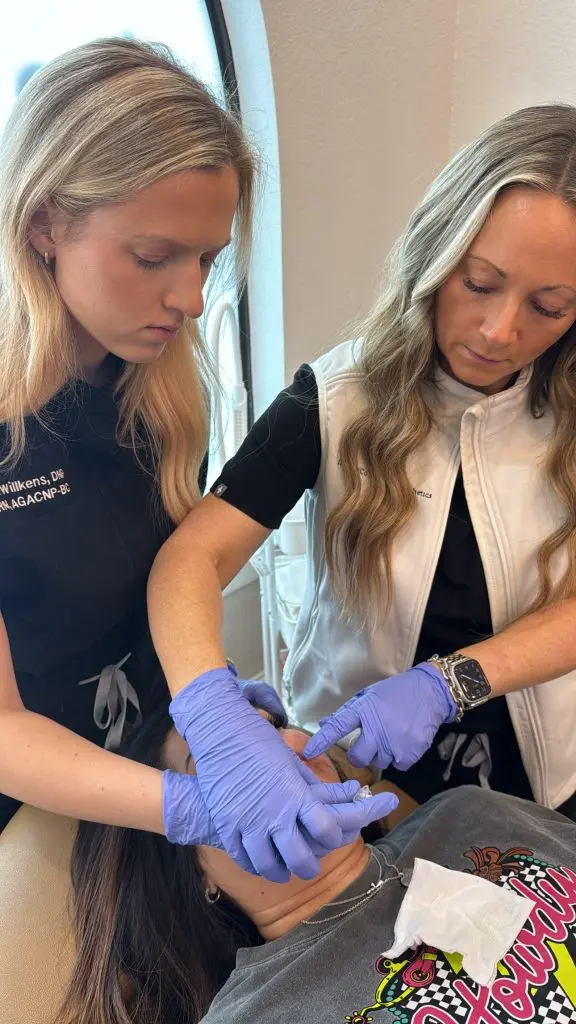
Layer 1: Foundational neurotoxin certification. This is your entry point — comprehensive botox training in Texas that covers facial anatomy, injection points, dosing, and safety protocols, with real hands-on injecting rather than observation-only formats.
Layer 2: Dermal filler certification. Fillers carry higher risk (vascular occlusion, in particular) and higher revenue. Dedicated programs like our Botox and dermal filler training course for registered nurses pair the two skill sets from the start, which is why combined RN injector training has become the most efficient first stack for nurses.
Layer 3: Specialty technique training. Lips are the highest-demand filler area among patients under 40, and technique-specific programs such as lip filler training in Texas signal to employers that you can handle the treatments patients actually book.
Layer 4: Role-specific and advanced credentials. PAs, for example, benefit from programs built around their scope and delegation requirements — see our Botox and dermal filler training course for physician assistants. From there, mentorship hours, complication management, and business-of-aesthetics training round out a senior-level stack.
How to Stack Without Breaking the Bank
The most common objection to stacking is cost. It’s a fair concern — but stacking is usually cheaper than people expect when done strategically.
Start by understanding real pricing. Our breakdown of Botox certification cost — what to expect and how to choose the right training program walks through typical price ranges and the red flags that separate legitimate hands-on programs from certificate mills.
Then sequence smartly:
- Begin with didactics online. A structured program like our best online Botox training lets you master anatomy, pharmacology, and protocols on your own schedule and at a lower cost before committing to in-person dates.
- Stack hands-on training locally. Travel is a hidden cost of certification. Training close to home — and returning to the same academy for each new layer — keeps expenses down and builds a consistent skill foundation.
- Combine layers where possible. Courses that teach neurotoxins and fillers together compress two certifications into one weekend of hands-on work.
One more practical note: injectors who train locally often build their first client base locally too. New injectors in Central Texas, for instance, frequently gain their earliest paid experience serving patients searching for affordable Botox in Austin, TX — a market that rewards well-credentialed newcomers.
Where to Stack: Training Across Texas
Accessibility is what makes stacking sustainable. The Texas Academy of Medical Aesthetics runs hands-on programs across eight training locations statewide, so each new certification layer is a short drive rather than a flight:
- Botox training in Dallas
- Botox training in Fort Worth
- Botox training in Austin
- Botox training in Plano
- Botox training in The Woodlands
- Botox training in Colleyville
- Botox training in Argyle
- Botox training in Waxahachie
Every location follows the same curriculum, taught on live models under physician oversight, so your stacked certifications are consistent no matter which city you train in.
The Bottom Line
In 2026, a single Botox certificate is the aesthetic industry’s equivalent of a learner’s permit. It gets you on the road — but employers, regulators, and patients all want to see the full license. Certification stacking is how serious injectors answer that demand: layered, documented, hands-on credentials that prove competence across the treatments modern practices actually offer.
The good news? You don’t have to build the stack overnight. Start with a strong foundational program, add fillers, layer in specialties, and let each certification pay for the next through higher earning power.
Ready to build your first layer — or your next one? Explore programs, locations, and online options at InjectorTraining.org, and take the first step toward a credential stack that keeps you competitive for the rest of the decade.