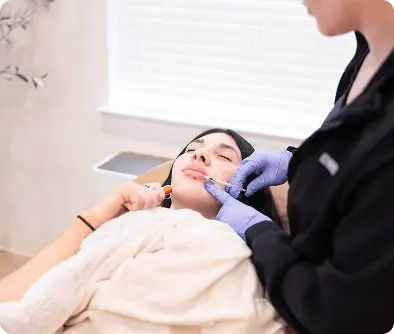
If you’re a registered nurse exploring aesthetics, one question comes up before any other: can RNs inject Botox in Texas? The short answer is yes :- Texas allows registered nurses to administer Botox and dermal fillers, but only under a specific legal framework involving physician delegation, written protocols, and proper training. Getting this right protects your license, your patients, and your career. Below, we break down exactly what the law requires, what training you need, and how supervision works in 2026.
The Short Answer: Yes, With Physician Delegation
Registered nurses in Texas can legally inject Botox, Dysport, and dermal fillers. What makes it legal is not the procedure itself but the structure around it. Cosmetic injectables are classified as medical procedures in Texas, which means a licensed physician must be involved through a process called delegation.
There is no single statute that says “RNs may inject Botox.” Instead, the rules come from the intersection of two regulatory bodies: the Texas Medical Board (TMB) and the Texas Board of Nursing (BON). An RN must satisfy both simultaneously. The foundational principle is physician delegation—a physician authorizes a qualified, trained nurse to perform the injection under defined conditions.
This is the core of any quality botox training texas program: teaching nurses not just how to inject, but how to practice within the legal structure that keeps them compliant.
What Texas Law Actually Says
Under the Texas Occupations Code §157.001, a physician may delegate medical acts only to “a qualified and properly trained person acting under the physician’s supervision.” The key phrase is qualified person. A registered nurse, by virtue of holding an active nursing license, qualifies—provided the delegation and training requirements are met.
The Texas Board of Nursing has issued position statements clarifying that:
- RNs may administer Botox and dermal fillers under physician delegation.
- The delegating physician must have examined the patient or established protocols for patient selection.
- RNs must have appropriate training before performing injections.
- Documentation must meet both Texas Medical Board and nursing standards.
Aesthetic injections fall under “medication administration” within the nursing scope, which RNs are permitted to perform when properly delegated. Importantly, Texas does not require a specific number of training hours by statute. However, the Board emphasizes that nurses must be genuinely competent in any procedure they perform. Inadequate training can lead to findings of unsafe practice—which is why rn injector training matters far beyond a certificate on the wall.

Understanding Physician Delegation and Written Protocols
Delegation is more than a verbal “go ahead.” A compliant arrangement requires a signed, written delegation protocol. Under 22 Texas Administrative Code §169.26, this protocol must specify the qualifications and credentials of the person performing the delegated act, along with any training requirements.
A properly structured protocol typically covers:
- Patient selection criteria — who is and isn’t a candidate.
- The Good Faith Exam — a required patient evaluation before treatment.
- Standing orders — the products, doses, and treatment areas authorized.
- Adverse event procedures — what to do if a complication arises.
- Documentation standards — how each treatment must be recorded.
Naming providers by credential class (e.g., “RN” or “APRN”) rather than by individual name is acceptable and easier to maintain as staff changes. This is one of the practical compliance details a strong training program teaches alongside injection technique.
How Supervision Works in Practice
A common misconception is that the delegating physician must be physically present for every injection. Texas supervision rules are more nuanced. Physician supervision does not always require the doctor to be in the room during treatment. What the rules require is that the physician maintain appropriate oversight and remain immediately available for consultation in the event of an adverse outcome.
For RNs specifically, this means:
- The physician has established and signed the written protocols.
- A Good Faith Exam has been completed for the patient.
- The physician is reachable for emergency consultation.
This framework lets experienced RNs operate efficiently in medical spa and clinic settings while keeping a licensed physician accountable for patient safety. Notably, RNs cannot independently assess, diagnose, or prescribe injectables—those functions remain with the physician or, in some cases, an advanced practice provider.
RNs vs. NPs vs. PAs: How Scope Differs
Texas treats different credentials differently, which is worth understanding if you’re planning your career path:
- Registered Nurses (RNs) can inject under physician delegation and written protocols but cannot prescribe or independently evaluate patients for treatment.
- Nurse Practitioners (NPs/APRNs) have greater autonomy. With prescriptive authority, an advanced practice registered nurse can prescribe and administer injectables, though typically still under a prescriptive authority agreement.
- Physician Assistants (PAs) can inject under their supervising physician’s delegatory authority, governed by Texas Occupations Code Chapter 204.
What all three share is the requirement for physician involvement. No one in this group operates entirely on their own when it comes to cosmetic injectables. If you’re a physician assistant, there’s a dedicated training track built around your scope, just as there is a tailored Botox and dermal filler course for registered nurses.
What Counts as “Appropriate Training” for RNs
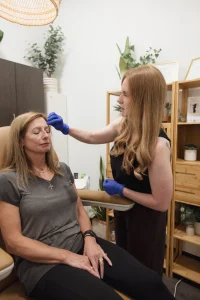
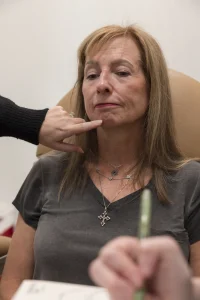
Because Texas doesn’t mandate a fixed number of hours, the burden is on you to be demonstrably competent. A credible training program should include hands-on, supervised injection practice on live models—not just lecture or video content. Look for training that covers:
- Facial and neck anatomy, including danger zones for filler.
- Neuromodulator mechanism, dilution, and dosing.
- Product knowledge across Botox, Dysport, and major filler brands.
- Complication management, including vascular occlusion and the use of hyaluronidase.
- Consultation, consent, and documentation practices.
- The legal and delegation framework specific to Texas.
The Texas Academy of Medical Aesthetics (TAMA) was founded specifically to deliver this kind of comprehensive, compliance-focused education to licensed medical professionals. You can train at one of TAMA’s Texas training locations or through the fully online best online Botox training course if an in-person schedule is hard to manage.
Where You Can Train Across Texas
TAMA offers in-person rn injector training at locations throughout the state, making it easy to find quality instruction near you. Whether you’re in the Metroplex, Central Texas, or the Houston area, there’s a campus within reach:
- Botox training in Dallas, Texas
- Botox training in Fort Worth, Texas
- Botox training in Plano, Texas
- Botox training in Colleyville, Texas
- Botox training in Argyle, Texas
- Botox training in Austin, Texas
- Botox training in The Woodlands, Texas
- Botox training in Waxahachie, Texas
You can also explore the full statewide overview on the Texas training hub, and if you want to expand your skill set further, the lip filler training in Texas course builds directly on neuromodulator fundamentals.
What About Cost and Certification?
Training cost is one of the biggest factors nurses weigh, and it varies widely based on format, hands-on hours, and what’s included. Rather than choosing on price alone, evaluate the quality of live injection practice, instructor credentials, and post-course support. For a detailed breakdown of pricing and how to choose wisely, see this guide on Botox certification cost and choosing the right program.
Keep in mind that “certification” in aesthetics is not a state license—it’s documentation that you’ve completed competency training. That documentation supports the “properly trained” requirement in your physician’s delegation protocol, which is exactly why it carries weight.
Putting It All Together
So, can RNs inject Botox in Texas? Yes—when three pieces are in place: a signed physician delegation with written protocols, a completed Good Faith Exam for each patient, and documented, genuine training in the procedures you perform. RNs administer; physicians delegate and supervise; and proper documentation ties it all together.
For nurses, the path forward is clear. Secure quality botox training texas instruction, partner with a delegating physician under compliant protocols, and keep your documentation airtight. Done right, aesthetic injecting is one of the most rewarding and flexible directions an RN career can take.
Ready to start? Explore TAMA’s registered nurse injector courses or browse all training locations to find the option that fits your goals.
This article is for educational purposes and reflects general regulatory information as of 2026. It is not legal advice. Always confirm current requirements with the Texas Medical Board and Texas Board of Nursing, and consult your delegating physician regarding your specific practice arrangement.